Understanding IBAN and SWIFT Codes: A Comprehensive Guide

iban and swift codes

If you frequently make international transactions or have a business that operates globally, you may have come across terms like IBAN and SWIFT codes. These codes are used to facilitate international payments and ensure that money is transferred securely and accurately between banks. In this comprehensive guide, we will break down what IBAN and SWIFT codes are, how to interpret them, and how to use them effectively.

What are IBAN and SWIFT Codes, and Why are They Important?

An IBAN, or International Bank Account Number, is a unique identifier assigned to bank accounts involved in international transactions. The IBAN contains information about the country, bank, and specific account, making it easier for banks to process cross-border payments. IBANs are used by banks in Europe, the Middle East, and parts of Africa and Asia.

SWIFT, or Society for Worldwide Interbank Financial Telecommunication, codes are a global system used for transferring money between banks. SWIFT codes consist of eight to eleven characters and are used to identify the bank, country, and location of the recipient’s account. Unlike IBANs, which are specific to individual bank accounts, SWIFT codes are assigned to banks themselves.

Both IBAN and SWIFT codes are important for international transactions as they ensure that the correct bank and account are used, reducing the risk of errors and delays in payment processing.

How to Interpret an IBAN: Breaking Down the Different Sections

IBANs are made up of a series of alphanumeric characters, typically ranging from 15 to 34 digits depending on the country. Each IBAN contains a country code, check digits, and the bank account number. The specific format of the IBAN varies by country.

The first two characters of the IBAN represent the country code, followed by two check digits. The check digits are used to verify that the IBAN is valid and has been calculated using a specific algorithm. The remaining characters represent the bank and account numbers.

Decoding SWIFT Codes: Understanding the Structure and Format

SWIFT codes are also made up of alphanumeric characters and consist of a unique 8-11 character code. The first four characters of the code represent the bank code, followed by two characters for the country code, two for the location code, and three for the branch code. However, not all SWIFT codes contain all of these sections.

The first four characters of the SWIFT code are assigned to the bank and help to identify the financial institution that the code is associated with. The country code and location code provide information about the country and city where the bank is located. Finally, the branch code is used to identify a specific branch of the bank.

IBAN vs. SWIFT: What’s the Difference, and When to Use Each

IBANs and SWIFT codes are both used for international transactions, but they serve different purposes. IBANs are used to identify individual bank accounts involved in international payments, while SWIFT codes identify the bank itself.

If you are making an international payment, you will typically need both the IBAN and SWIFT codes for the recipient’s bank. The IBAN is used to ensure that the correct bank account is credited with the payment, while the SWIFT code is used to identify the bank.

How to Generate an IBAN or SWIFT Code: A Step-by-Step Guide

What is an IBAN Code?

IBAN stands for International Bank Account Number. It is a unique identifier for a bank account that is used in international money transfers. IBAN codes are composed of a country code, two check digits, and a bank account number. The format of IBAN codes varies by country, but they are typically between 16 and 34 characters long.

iban breakdown
iban breakdown

How to Generate an IBAN Code

To generate an IBAN code, you’ll need to know the recipient’s bank account number and the bank’s routing number. You can generate an IBAN code using an online IBAN generator or by contacting your bank. Some banks also include IBAN codes on account statements.

What is a SWIFT Code?

SWIFT stands for Society for Worldwide Interbank Financial Telecommunication. A SWIFT code is a unique identifier for a bank and is used in international money transfers. SWIFT codes are composed of either 8 or 11 characters and include a bank code, a country code, a location code, and a branch code.

swift code breakdown

How to Generate a SWIFT Code

To generate a SWIFT code, you’ll need to know the recipient’s bank’s SWIFT code. You can find a bank’s SWIFT code by searching online or by contacting the bank directly. Some banks also include SWIFT codes on account statements.

What are the Differences Between IBAN and SWIFT Codes?

IBAN codes are used to identify individual bank accounts, while SWIFT codes are used to identify banks themselves. IBAN codes are used primarily in Europe, the Middle East, and some countries in Africa and Asia, while SWIFT codes are used worldwide. IBAN codes are longer than SWIFT codes and contain more detailed information about the bank account.

Why are IBAN and SWIFT Codes Important?

IBAN and SWIFT codes are important because they ensure that international money transfers are processed correctly. Without these codes, it can be difficult to identify the correct bank and bank account, which can lead to delays or even lost funds. By using IBAN and SWIFT codes, you can ensure that your money is transferred quickly and securely.

Common Mistakes to Avoid When Using IBAN and SWIFT Codes

  1. Incorrect Formatting: IBANs and SWIFT codes are typically long and contain specific characters, which can lead to errors when typing them out. Make sure to double-check the codes and ensure that they are in the correct format before initiating a transfer.
  2. Using the Wrong Codes: IBANs and SWIFT codes are unique to each bank and are used to identify the bank and account holder during a transaction. Using the wrong codes can result in the transfer being rejected or sent to the wrong account.
  3. Not Updating the Codes: Banks may change their IBAN or SWIFT codes due to mergers, acquisitions, or rebranding. Failing to update these codes can result in transactions being declined or delayed.
  4. Using Outdated Information: It’s crucial to use the most up-to-date information when sending and receiving international transfers. Failure to do so can result in transactions being rejected or returned.
  5. Not Confirming with the Recipient: Before initiating a transfer, it’s best to confirm the recipient’s bank details, including their IBAN and SWIFT codes. This can help prevent errors and ensure that the transfer is processed correctly.
  6. Not Understanding the Fees: Banks and financial institutions may charge fees for international transfers, which can vary depending on the amount, destination, and currency. Make sure to understand the fees associated with the transfer and account for them when sending or receiving funds.
  7. Using Unverified Third-Party Services: Third-party services may claim to offer lower fees or faster transfer times than traditional banks. However, it’s important to ensure that these services are legitimate and secure before using them for international transfers.
  8. Not Including Relevant Information: When sending or receiving international transfers, it’s crucial to include relevant information such as the purpose of the transaction, the sender’s contact information, and any reference numbers provided by the bank.
  9. Not Considering Currency Exchange Rates: When sending funds to another country, the exchange rate between currencies can have a significant impact on the amount received by the recipient. It’s essential to consider the current exchange rate and any associated fees before initiating a transfer.
  10. Not Checking Transfer Limits: Banks and financial institutions may have transfer limits in place for international transactions. It’s important to check these limits before initiating a transfer to ensure that the amount being sent falls within the allowed range.


Commercial Bank Routing Numbers and Locations

banks of banks

What is a routing number?

A routing number is a 9-digit code that identifies a financial institution in the United States. It is used for routing money transfers and other financial transactions between banks, credit unions, and other financial institutions. The routing number is also known as an ABA (American Bankers Association) routing code or RTN (Routing Transit Number), and it can be easily located on the bottom of a check or in the online banking portals of financial institutions. The routing number is an important piece of information when transferring money or making payments online. It helps to ensure that the money is sent to the right place and with the correct details. Knowing your bank’s routing number can also help you ensure you are sending money to the right account.

When you send or receive funds directly from your bank account in transactions such as electronic payments, the bank must know where the funds are supposed to go. The routing number identifies the financial institution where your funds are held and indicates where to send funds that are owed to you. Employers need your routing number to establish payment systems such as a direct deposit.

Typically, banks and financial institutions have multiple routing numbers that serve distinct purposes, geographic regions, and branches. Before initiating a money transfer, it is crucial to ensure that the correct routing number is utilized.

Our database contains more than 20,000 unique routing numbers. This platform is solely for educational purposes. Even though every effort is made to provide accurate information, users must understand that this website is not responsible for how accurate the information is. Only your bank can confirm the accuracy of your bank account details. If you are making an important, time-sensitive payment, you should contact your bank beforehand.

Where is the routing number on a check?

routing number on a check

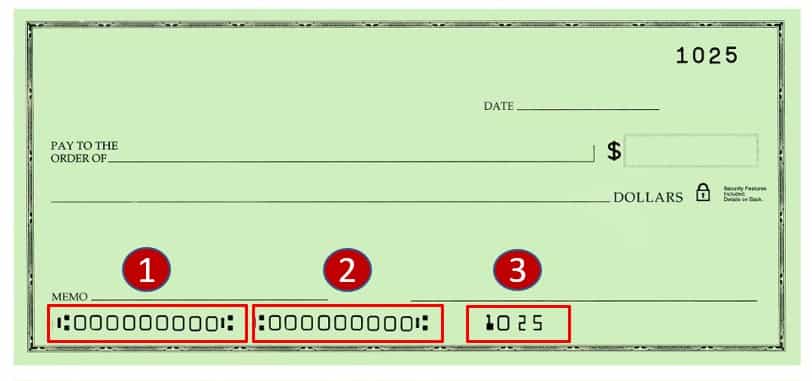
What numbers appear on a check? You will find 3 groups of numbers at the bottom of a check. The first group contains the routing number, the second is the account number, and the third is the check number.

The routing number, which is the first set of numbers in the lower left corner of a check are nine-digit code, and the character symbol surrounding the numbers is not part of the routing number. Routing numbers, also known as transit numbers, are public and may vary depending on the region where your account was opened.

It is helpful to know where to find these numbers when setting up automatic payments for monthly bills and filling out forms for actions such as a direct deposit. Below is more information about routing numbers.

NOTE: In some cases, the order of the checking account number and check serial number is reversed.

When do you need the Commercial Bank routing number?

The Commercial Bank routing number is required in a variety of situations, including setting up direct deposit, automatic loan payments, or recurring transfers like bill payments.

You’ll also need it when you file taxes to receive your tax refund or debit a tax payment, or when you conduct Automated Clearing House (ACH), transfers between different bank accounts.

Generally, you’ll only need your routing number when funds are being directly transferred to or from your bank account — a routing number is never for debit card or credit card purchases.

This number is also used to set up an online account with your bank to be used with personal finance and accounting software.

Commercial Bank routing numbers

Make use of the “Search” box to narrow your results by city, state, address, or routing number. You can view all of the information pertaining to the routing number by clicking on the link that is located in the table below (address, telephone number, zip code, etc.).

Routing Number 

Address 

City 

State 

042103460

208 EAST MAIN STREET

GRAYSON

KENTUCKY

042106331

151 UNIVERSITY DR.

WEST LIBERTY

KENTUCKY

053206961

P O BOX 127

HONEA PATH

SOUTH CAROLINA

064205388

PO BOX 400

HARROGATE

TENNESSEE

065302963

1101 22ND AVE

MERIDIAN

MISSISSIPPI

072403554

PO BOX 280

ITHACA

MICHIGAN

072403677

PO BOX 280

ITHACA

MICHIGAN

081006201

P.O. BOX 1209

MARYLAND HEIGHTS

MISSOURI

101100375

1830 MAIN

PARSONS

KANSAS

101115098

1830 MAIN

PARSONS

KANSAS

104102642

401 SOUTH MAIN STREET

NELSON

NEBRASKA

114905499

100 MOODY ST

MASON

TEXAS

272471357

101 N PINE RIVER

ITHACA

MICHIGAN

ABA check routing number digits meaning

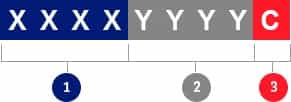
The numbers that comprise a routing number can be broken down into 3 parts, each of which has a distinct meaning.

rtn content
rtn content
  • First 4 digits: The first 4 numbers represent the Federal Reserve Routing Symbol. There are 12 Federal Reserve Banks throughout the US that service a geographic area/district).
  • Digits 5 to 8: These are also known as ABA Institution Identifier, these numbers indicate which bank or financial institution within the Federal Reserve District.
  • 9th digit: This is the “check digit“. It’s used to verify if a routing number is valid using a mathematical formula.

How to find your Commercial Bank routing number (ABA/RTN)

The following is a list of the various options available to you for locating your Commercial Bank ABA routing number:

  • Routing Numbers section of this website:  The majority of the major banks in the United States are listed above; you can begin your search there.
  • Online banking portal: You will be able to get the routing number for your bank by logging into your online banking account.
  • Paper check or bank statement: Checks issued by a bank or bank statements. Check the lower left corner of your check.
  • Bank customer service: You’ll be able to get your routing number by contacting your bank’s customer service staff
  • Fedwire / American Banking Association: You can look up your routing number on the official website of the Federal Reserve or the American Banking Association.

Always check with your bank or the recipient to ensure that the correct routing number has been provided so that the payment can be processed quickly and safely by your bank.

What is the Automated Clearing House (ACH) number?

The Automated Clearing House, also known as ACH, is an electronic payment delivery system that enables users to electronically send and receive payments as well as collect funds through a network known as ACH. ACH transactions are usually next-day entries when exchanged with other financial institutions. Direct deposits and the conversion of paper checks to electronic versions are both examples of ACH functions.

ACHs were developed to handle high volumes of low-value transactions and charge fees that are competitively priced to encourage the use of the system for the transfer of such transactions. The software was developed to support the acceptance of payment batches, which enables a large number of payments to be processed all at once.

Differences between FedACH & FedWire credit transfers

Accordingly, the following is a comparison of some of the key distinctions that can be made between ACH credit transfers and FedWire credit transfers in the United States.

  • Availability: ACH transfers can only be used for financial dealings within the same country. If you want to send money to a foreign country using the ACH network, you will need to make use of an international wire transfer.
  • Security: Both types of transfers provide additional layers of protection than what is available when you send a check in the mail. Due to the fact that banking information is encrypted while being transferred, financial institutions that process wire and ACH transfers offer an additional layer of protection to their customers. Before either kind of transfer can be finalized, a series of steps must first be taken to verify the sender’s identity or the recipient’s banking information. Despite these precautions, however, mistakes and fraudulent activity can still take place. Canceling a wire transfer is typically a race against the clock because it is processed much more quickly than ACH transfers and is considered complete once the funds have been received. ACH transfers can be stopped.
  • Transfer limits: Both ACH and wire transfers have daily transfer limits that must be adhered to. Confirm this with your financial institution, such as your bank or credit union.
  • Processing times: The processing of an ACH transfer can take anywhere from one to several business days, whereas the majority of wire transfers are completed within one business day.
  • Posting times: The recipient of a wire transfer can access the funds as soon as they are deposited into their account. ACH transfers are carried out in a slightly different manner: the funds will be shown as “pending” status and won’t be made available to you for use until the ACH system has been fully cleared. There is a possibility that this will take up to three business days.
  • Reversals: If there was an error with your ACH transfer, the good news is that you might be able to reverse the transaction by submitting a request for it. Above all, wire transfers, on the other hand, do not provide this luxury and, once the transaction is started, it cannot be reversed.
  • Fees: You should budget anywhere from $10 to $35 for the fee associated with each wire transfer that you start. There is a possibility that recipients will be required to pay a small fee for incoming wire transfers. The vast majority of ACH transfers are free, but there may be a fee associated with expedited bill pay services or transfers to banks located outside of the United States.

Difference between routing numbers, SWIFT/BIC codes, IBANs, and sort codes

If you want to send or receive money through your bank, you will most likely come across some terms that you are unfamiliar with, such as the SWIFT / BIC code, the IBAN, and the sort code. What do each of these acronyms stand for, and what do people typically refer to them as? However, each one is necessary for certain circumstances due to the fact that various countries and banks have varying procedures and requirements. Although they all appear to do essentially the same thing, which is to assist banks in determining where your money needs to go when it is being transferred, the reality is that they do not.

When processing domestic ACH payments or wire transfers in the United States, routing numbers, which are nine-digit codes, are used to identify individual banks. When making payments in countries other than the United States, you do not need to provide these.

SWIFT / BIC codes are unique identifiers that can be used by banks and other financial institutions all over the world. These codes can have either 8 or 11 digits. In contrast to routing numbers, these codes are utilized for financial transactions that take place on a global scale.

IBANs, or international bank account numbers, are a means by which a country, a financial institution, and individual bank accounts can be uniquely identified. The majority of banks in the Eurozone are the ones to issue them, but financial institutions in other regions are beginning to follow suit.

Sort Codes Sort Codes are 6-digit numbers that identify the bank and the branch where a bank account is held. These numbers are used for domestic transfers.

Note: This website provides a quick and easy way to search & find routing numbers for banks and other financial institutions in the United States. If you’re not sure which routing number to use contact your bank directly. You can call your bank using the phone number listed on your debit/credit card or send a message through your online banking system. Using the wrong routing number can lead to delays in processing the transfer.

About Our Codes

Based on our comprehensive database of more than 100,000 unique numbers/codes. This site is only available for informational purposes. Users need to know that while every effort is made to provide accurate information, this website does not guarantee that it is correct. The accuracy of the bank account information can only be verified by your bank. We advise getting in touch with your bank before making a time-sensitive, important payment.

First Merchants Bank Routing Numbers and Locations

first merchants bank

What is a routing number?

A routing number is a 9-digit code that identifies a financial institution in the United States. It is used for routing money transfers and other financial transactions between banks, credit unions, and other financial institutions. The routing number is also known as an ABA (American Bankers Association) routing code or RTN (Routing Transit Number), and it can be easily located on the bottom of a check or in the online banking portals of financial institutions. The routing number is an important piece of information when transferring money or making payments online. It helps to ensure that the money is sent to the right place and with the correct details. Knowing your bank’s routing number can also help you ensure you are sending money to the right account.

When you send or receive funds directly from your bank account in transactions such as electronic payments, the bank must know where the funds are supposed to go. The routing number identifies the financial institution where your funds are held and indicates where to send funds that are owed to you. Employers need your routing number to establish payment systems such as a direct deposit.

Typically, banks and financial institutions have multiple routing numbers that serve distinct purposes, geographic regions, and branches. Before initiating a money transfer, it is crucial to ensure that the correct routing number is utilized.

Our database contains more than 20,000 unique routing numbers. This platform is solely for educational purposes. Even though every effort is made to provide accurate information, users must understand that this website is not responsible for how accurate the information is. Only your bank can confirm the accuracy of your bank account details. If you are making an important, time-sensitive payment, you should contact your bank beforehand.

Where is the routing number on a check?

routing number on a check

What numbers appear on a check? You will find 3 groups of numbers at the bottom of a check. The first group contains the routing number, the second is the account number, and the third is the check number.

The routing number, which is the first set of numbers in the lower left corner of a check are nine-digit code, and the character symbol surrounding the numbers is not part of the routing number. Routing numbers, also known as transit numbers, are public and may vary depending on the region where your account was opened.

It is helpful to know where to find these numbers when setting up automatic payments for monthly bills and filling out forms for actions such as a direct deposit. Below is more information about routing numbers.

NOTE: In some cases, the order of the checking account number and check serial number is reversed.

When do you need the First Merchants Bank routing number?

The First Merchants Bank routing number is required in a variety of situations, including setting up direct deposit, automatic loan payments, or recurring transfers like bill payments.

You’ll also need it when you file taxes to receive your tax refund or debit a tax payment, or when you conduct Automated Clearing House (ACH), transfers between different bank accounts.

Generally, you’ll only need your routing number when funds are being directly transferred to or from your bank account — a routing number is never for debit card or credit card purchases.

This number is also used to set up an online account with your bank to be used with personal finance and accounting software.

First Merchants Bank routing numbers

Make use of the “Search” box to narrow your results by city, state, address, or routing number. You can view all of the information pertaining to the routing number by clicking on the link that is located in the table below (address, telephone number, zip code, etc.).

Routing Number 

Address 

City 

State 

044072243

P O BOX 549

DALEVILLE

INDIANA

071205850

PO BOX 549

DALEVILLE

INDIANA

074900657

PO BOX 549

DALEVILLE

INDIANA

074903353

PO BOX 549

DALEVILLE

INDIANA

074905461

PO BOX 549

DALEVILLE

INDIANA

074908303

PO BOX 549

DALEVILLE

INDIANA

074913275

PO BOX 549

DALEVILLE

INDIANA

074913314

PO BOX 549

DALEVILLE

INDIANA

074913660

PO BOX 549

DALEVILLE

INDIANA

074913712

PO BOX 549

DALEVILLE

INDIANA

074971945

PO BOX 549

DALEVILLE

INDIANA

271972116

PO BOX 549

DALEVILLE

INDIANA

271974033

PO BOX 549

DALEVILLE

INDIANA

274970843

PO BOX 549

DALEVILLE

INDIANA

ABA check routing number digits meaning

The numbers that comprise a routing number can be broken down into 3 parts, each of which has a distinct meaning.

rtn content
rtn content
  • First 4 digits: The first 4 numbers represent the Federal Reserve Routing Symbol. There are 12 Federal Reserve Banks throughout the US that service a geographic area/district).
  • Digits 5 to 8: These are also known as ABA Institution Identifier, these numbers indicate which bank or financial institution within the Federal Reserve District.
  • 9th digit: This is the “check digit“. It’s used to verify if a routing number is valid using a mathematical formula.

How to find your First Merchants Bank routing number (ABA/RTN)

The following is a list of the various options available to you for locating your First Merchants Bank ABA routing number:

  • Routing Numbers section of this website:  The majority of the major banks in the United States are listed above; you can begin your search there.
  • Online banking portal: You will be able to get the routing number for your bank by logging into your online banking account.
  • Paper check or bank statement: Checks issued by a bank or bank statements. Check the lower left corner of your check.
  • Bank customer service: You’ll be able to get your routing number by contacting your bank’s customer service staff
  • Fedwire / American Banking Association: You can look up your routing number on the official website of the Federal Reserve or the American Banking Association.

Always check with your bank or the recipient to ensure that the correct routing number has been provided so that the payment can be processed quickly and safely by your bank.

What is the Automated Clearing House (ACH) number?

The Automated Clearing House, also known as ACH, is an electronic payment delivery system that enables users to electronically send and receive payments as well as collect funds through a network known as ACH. ACH transactions are usually next-day entries when exchanged with other financial institutions. Direct deposits and the conversion of paper checks to electronic versions are both examples of ACH functions.

ACHs were developed to handle high volumes of low-value transactions and charge fees that are competitively priced to encourage the use of the system for the transfer of such transactions. The software was developed to support the acceptance of payment batches, which enables a large number of payments to be processed all at once.

Differences between FedACH & FedWire credit transfers

Accordingly, the following is a comparison of some of the key distinctions that can be made between ACH credit transfers and FedWire credit transfers in the United States.

  • Availability: ACH transfers can only be used for financial dealings within the same country. If you want to send money to a foreign country using the ACH network, you will need to make use of an international wire transfer.
  • Security: Both types of transfers provide additional layers of protection than what is available when you send a check in the mail. Due to the fact that banking information is encrypted while being transferred, financial institutions that process wire and ACH transfers offer an additional layer of protection to their customers. Before either kind of transfer can be finalized, a series of steps must first be taken to verify the sender’s identity or the recipient’s banking information. Despite these precautions, however, mistakes and fraudulent activity can still take place. Canceling a wire transfer is typically a race against the clock because it is processed much more quickly than ACH transfers and is considered complete once the funds have been received. ACH transfers can be stopped.
  • Transfer limits: Both ACH and wire transfers have daily transfer limits that must be adhered to. Confirm this with your financial institution, such as your bank or credit union.
  • Processing times: The processing of an ACH transfer can take anywhere from one to several business days, whereas the majority of wire transfers are completed within one business day.
  • Posting times: The recipient of a wire transfer can access the funds as soon as they are deposited into their account. ACH transfers are carried out in a slightly different manner: the funds will be shown as “pending” status and won’t be made available to you for use until the ACH system has been fully cleared. There is a possibility that this will take up to three business days.
  • Reversals: If there was an error with your ACH transfer, the good news is that you might be able to reverse the transaction by submitting a request for it. Above all, wire transfers, on the other hand, do not provide this luxury and, once the transaction is started, it cannot be reversed.
  • Fees: You should budget anywhere from $10 to $35 for the fee associated with each wire transfer that you start. There is a possibility that recipients will be required to pay a small fee for incoming wire transfers. The vast majority of ACH transfers are free, but there may be a fee associated with expedited bill pay services or transfers to banks located outside of the United States.

Difference between routing numbers, SWIFT/BIC codes, IBANs, and sort codes

If you want to send or receive money through your bank, you will most likely come across some terms that you are unfamiliar with, such as the SWIFT / BIC code, the IBAN, and the sort code. What do each of these acronyms stand for, and what do people typically refer to them as? However, each one is necessary for certain circumstances due to the fact that various countries and banks have varying procedures and requirements. Although they all appear to do essentially the same thing, which is to assist banks in determining where your money needs to go when it is being transferred, the reality is that they do not.

When processing domestic ACH payments or wire transfers in the United States, routing numbers, which are nine-digit codes, are used to identify individual banks. When making payments in countries other than the United States, you do not need to provide these.

SWIFT / BIC codes are unique identifiers that can be used by banks and other financial institutions all over the world. These codes can have either 8 or 11 digits. In contrast to routing numbers, these codes are utilized for financial transactions that take place on a global scale.

IBANs, or international bank account numbers, are a means by which a country, a financial institution, and individual bank accounts can be uniquely identified. The majority of banks in the Eurozone are the ones to issue them, but financial institutions in other regions are beginning to follow suit.

Sort Codes Sort Codes are 6-digit numbers that identify the bank and the branch where a bank account is held. These numbers are used for domestic transfers.

Note: This website provides a quick and easy way to search & find routing numbers for banks and other financial institutions in the United States. If you’re not sure which routing number to use contact your bank directly. You can call your bank using the phone number listed on your debit/credit card or send a message through your online banking system. Using the wrong routing number can lead to delays in processing the transfer.

About Our Codes

Based on our comprehensive database of more than 100,000 unique numbers/codes. This site is only available for informational purposes. Users need to know that while every effort is made to provide accurate information, this website does not guarantee that it is correct. The accuracy of the bank account information can only be verified by your bank. We advise getting in touch with your bank before making a time-sensitive, important payment.

Simmons Bank Routing Numbers and Locations

simmons first national banks

What is a routing number?

A routing number is a 9-digit code that identifies a financial institution in the United States. It is used for routing money transfers and other financial transactions between banks, credit unions, and other financial institutions. The routing number is also known as an ABA (American Bankers Association) routing code or RTN (Routing Transit Number), and it can be easily located on the bottom of a check or in the online banking portals of financial institutions. The routing number is an important piece of information when transferring money or making payments online. It helps to ensure that the money is sent to the right place and with the correct details. Knowing your bank’s routing number can also help you ensure you are sending money to the right account.

When you send or receive funds directly from your bank account in transactions such as electronic payments, the bank must know where the funds are supposed to go. The routing number identifies the financial institution where your funds are held and indicates where to send funds that are owed to you. Employers need your routing number to establish payment systems such as a direct deposit.

Typically, banks and financial institutions have multiple routing numbers that serve distinct purposes, geographic regions, and branches. Before initiating a money transfer, it is crucial to ensure that the correct routing number is utilized.

Our database contains more than 20,000 unique routing numbers. This platform is solely for educational purposes. Even though every effort is made to provide accurate information, users must understand that this website is not responsible for how accurate the information is. Only your bank can confirm the accuracy of your bank account details. If you are making an important, time-sensitive payment, you should contact your bank beforehand.

Where is the routing number on a check?

routing number on a check

What numbers appear on a check? You will find 3 groups of numbers at the bottom of a check. The first group contains the routing number, the second is the account number, and the third is the check number.

The routing number, which is the first set of numbers in the lower left corner of a check are nine-digit code, and the character symbol surrounding the numbers is not part of the routing number. Routing numbers, also known as transit numbers, are public and may vary depending on the region where your account was opened.

It is helpful to know where to find these numbers when setting up automatic payments for monthly bills and filling out forms for actions such as a direct deposit. Below is more information about routing numbers.

NOTE: In some cases, the order of the checking account number and check serial number is reversed.

When do you need the Simmons Bank routing number?

The Simmons Bank routing number is required in a variety of situations, including setting up direct deposit, automatic loan payments, or recurring transfers like bill payments.

You’ll also need it when you file taxes to receive your tax refund or debit a tax payment, or when you conduct Automated Clearing House (ACH), transfers between different bank accounts.

Generally, you’ll only need your routing number when funds are being directly transferred to or from your bank account — a routing number is never for debit card or credit card purchases.

This number is also used to set up an online account with your bank to be used with personal finance and accounting software.

Simmons Bank routing numbers

Make use of the “Search” box to narrow your results by city, state, address, or routing number. You can view all of the information pertaining to the routing number by clicking on the link that is located in the table below (address, telephone number, zip code, etc.).

Routing Number 

Address 

City 

State 

064201612

P. O. BOX 7009

PINE BLUFF

ARKANSAS

082900432

P O BOX 7009

PINE BLUFF

ARKANSAS

084302342

P O BOX 7009

PINE BLUFF

ARKANSAS

084308032

P O BOX 7009

PINE BLUFF

ARKANSAS

101102072

PO BOX 7009

PINE BLUFF

ARKANSAS

101109842

PO BOX 7009

PINE BLUFF

ARKANSAS

101189590

PO BOX 7009

PINE BLUFF

ARKANSAS

103003687

PO BOX 7009

PINE BLUFF

ARKANSAS

103101437

PO BOX 7009

PINE BLUFF

ARKANSAS

103113153

PO BOX 7009

PINE BLUFF

ARKANSAS

111900756

P O BOX 7009

PIN BLUFF

ARKANSAS

111924428

PO BOX 7009

PINE BLUFF

ARKANSAS

111924619

PO BOX 7009

PINE BLUFF

ARKANSAS

114014542

PO BOX 7009

PINE BLUFF

ARKANSAS

ABA check routing number digits meaning

The numbers that comprise a routing number can be broken down into 3 parts, each of which has a distinct meaning.

rtn content
rtn content
  • First 4 digits: The first 4 numbers represent the Federal Reserve Routing Symbol. There are 12 Federal Reserve Banks throughout the US that service a geographic area/district).
  • Digits 5 to 8: These are also known as ABA Institution Identifier, these numbers indicate which bank or financial institution within the Federal Reserve District.
  • 9th digit: This is the “check digit“. It’s used to verify if a routing number is valid using a mathematical formula.

How to find your Simmons Bank routing number (ABA/RTN)

The following is a list of the various options available to you for locating your Simmons Bank ABA routing number:

  • Routing Numbers section of this website:  The majority of the major banks in the United States are listed above; you can begin your search there.
  • Online banking portal: You will be able to get the routing number for your bank by logging into your online banking account.
  • Paper check or bank statement: Checks issued by a bank or bank statements. Check the lower left corner of your check.
  • Bank customer service: You’ll be able to get your routing number by contacting your bank’s customer service staff
  • Fedwire / American Banking Association: You can look up your routing number on the official website of the Federal Reserve or the American Banking Association.

Always check with your bank or the recipient to ensure that the correct routing number has been provided so that the payment can be processed quickly and safely by your bank.

What is the Automated Clearing House (ACH) number?

The Automated Clearing House, also known as ACH, is an electronic payment delivery system that enables users to electronically send and receive payments as well as collect funds through a network known as ACH. ACH transactions are usually next-day entries when exchanged with other financial institutions. Direct deposits and the conversion of paper checks to electronic versions are both examples of ACH functions.

ACHs were developed to handle high volumes of low-value transactions and charge fees that are competitively priced to encourage the use of the system for the transfer of such transactions. The software was developed to support the acceptance of payment batches, which enables a large number of payments to be processed all at once.

Differences between FedACH & FedWire credit transfers

Accordingly, the following is a comparison of some of the key distinctions that can be made between ACH credit transfers and FedWire credit transfers in the United States.

  • Availability: ACH transfers can only be used for financial dealings within the same country. If you want to send money to a foreign country using the ACH network, you will need to make use of an international wire transfer.
  • Security: Both types of transfers provide additional layers of protection than what is available when you send a check in the mail. Due to the fact that banking information is encrypted while being transferred, financial institutions that process wire and ACH transfers offer an additional layer of protection to their customers. Before either kind of transfer can be finalized, a series of steps must first be taken to verify the sender’s identity or the recipient’s banking information. Despite these precautions, however, mistakes and fraudulent activity can still take place. Canceling a wire transfer is typically a race against the clock because it is processed much more quickly than ACH transfers and is considered complete once the funds have been received. ACH transfers can be stopped.
  • Transfer limits: Both ACH and wire transfers have daily transfer limits that must be adhered to. Confirm this with your financial institution, such as your bank or credit union.
  • Processing times: The processing of an ACH transfer can take anywhere from one to several business days, whereas the majority of wire transfers are completed within one business day.
  • Posting times: The recipient of a wire transfer can access the funds as soon as they are deposited into their account. ACH transfers are carried out in a slightly different manner: the funds will be shown as “pending” status and won’t be made available to you for use until the ACH system has been fully cleared. There is a possibility that this will take up to three business days.
  • Reversals: If there was an error with your ACH transfer, the good news is that you might be able to reverse the transaction by submitting a request for it. Above all, wire transfers, on the other hand, do not provide this luxury and, once the transaction is started, it cannot be reversed.
  • Fees: You should budget anywhere from $10 to $35 for the fee associated with each wire transfer that you start. There is a possibility that recipients will be required to pay a small fee for incoming wire transfers. The vast majority of ACH transfers are free, but there may be a fee associated with expedited bill pay services or transfers to banks located outside of the United States.

Difference between routing numbers, SWIFT/BIC codes, IBANs, and sort codes

If you want to send or receive money through your bank, you will most likely come across some terms that you are unfamiliar with, such as the SWIFT / BIC code, the IBAN, and the sort code. What do each of these acronyms stand for, and what do people typically refer to them as? However, each one is necessary for certain circumstances due to the fact that various countries and banks have varying procedures and requirements. Although they all appear to do essentially the same thing, which is to assist banks in determining where your money needs to go when it is being transferred, the reality is that they do not.

When processing domestic ACH payments or wire transfers in the United States, routing numbers, which are nine-digit codes, are used to identify individual banks. When making payments in countries other than the United States, you do not need to provide these.

SWIFT / BIC codes are unique identifiers that can be used by banks and other financial institutions all over the world. These codes can have either 8 or 11 digits. In contrast to routing numbers, these codes are utilized for financial transactions that take place on a global scale.

IBANs, or international bank account numbers, are a means by which a country, a financial institution, and individual bank accounts can be uniquely identified. The majority of banks in the Eurozone are the ones to issue them, but financial institutions in other regions are beginning to follow suit.

Sort Codes Sort Codes are 6-digit numbers that identify the bank and the branch where a bank account is held. These numbers are used for domestic transfers.

Note: This website provides a quick and easy way to search & find routing numbers for banks and other financial institutions in the United States. If you’re not sure which routing number to use contact your bank directly. You can call your bank using the phone number listed on your debit/credit card or send a message through your online banking system. Using the wrong routing number can lead to delays in processing the transfer.

About Our Codes

Based on our comprehensive database of more than 100,000 unique numbers/codes. This site is only available for informational purposes. Users need to know that while every effort is made to provide accurate information, this website does not guarantee that it is correct. The accuracy of the bank account information can only be verified by your bank. We advise getting in touch with your bank before making a time-sensitive, important payment.

US Alliance Federal Credit Union Routing Numbers and Locations

usalliance financial

What is a routing number?

A routing number is a 9-digit code that identifies a financial institution in the United States. It is used for routing money transfers and other financial transactions between banks, credit unions, and other financial institutions. The routing number is also known as an ABA (American Bankers Association) routing code or RTN (Routing Transit Number), and it can be easily located on the bottom of a check or in the online banking portals of financial institutions. The routing number is an important piece of information when transferring money or making payments online. It helps to ensure that the money is sent to the right place and with the correct details. Knowing your bank’s routing number can also help you ensure you are sending money to the right account.

When you send or receive funds directly from your bank account in transactions such as electronic payments, the bank must know where the funds are supposed to go. The routing number identifies the financial institution where your funds are held and indicates where to send funds that are owed to you. Employers need your routing number to establish payment systems such as a direct deposit.

Typically, banks and financial institutions have multiple routing numbers that serve distinct purposes, geographic regions, and branches. Before initiating a money transfer, it is crucial to ensure that the correct routing number is utilized.

Our database contains more than 20,000 unique routing numbers. This platform is solely for educational purposes. Even though every effort is made to provide accurate information, users must understand that this website is not responsible for how accurate the information is. Only your bank can confirm the accuracy of your bank account details. If you are making an important, time-sensitive payment, you should contact your bank beforehand.

Where is the routing number on a check?

routing number on a check

What numbers appear on a check? You will find 3 groups of numbers at the bottom of a check. The first group contains the routing number, the second is the account number, and the third is the check number.

The routing number, which is the first set of numbers in the lower left corner of a check are nine-digit code, and the character symbol surrounding the numbers is not part of the routing number. Routing numbers, also known as transit numbers, are public and may vary depending on the region where your account was opened.

It is helpful to know where to find these numbers when setting up automatic payments for monthly bills and filling out forms for actions such as a direct deposit. Below is more information about routing numbers.

NOTE: In some cases, the order of the checking account number and check serial number is reversed.

When do you need the US Alliance Federal Credit Union routing number?

The US Alliance Federal Credit Union routing number is required in a variety of situations, including setting up direct deposit, automatic loan payments, or recurring transfers like bill payments.

You’ll also need it when you file taxes to receive your tax refund or debit a tax payment, or when you conduct Automated Clearing House (ACH), transfers between different bank accounts.

Generally, you’ll only need your routing number when funds are being directly transferred to or from your bank account — a routing number is never for debit card or credit card purchases.

This number is also used to set up an online account with your bank to be used with personal finance and accounting software.

US Alliance Federal Credit Union routing numbers

Make use of the “Search” box to narrow your results by city, state, address, or routing number. You can view all of the information pertaining to the routing number by clicking on the link that is located in the table below (address, telephone number, zip code, etc.).

Routing Number 

Address 

City 

State 

211080851

600 MIDLAND AVE

RYE

NEW YORK

211178640

600 MIDLAND AVENUE

RYE

NEW YORK

211179982

600 MIDLAND AVENUE

RYE

NEW YORK

211179995

600 MIDLAND AVENUE

RYE

NEW YORK

211384162

600 MIDLAND AVE

RYE

NEW YORK

211391689

600 MIDLAND AVE

RYE

NEW YORK

221277777

STE 350

RYE

NEW YORK

221973563

600 MIDLAND AVE

RYE

NEW YORK

221976861

600 MIDLAND AVE

RYE

NEW YORK

221981063

411 THEODORE FREMD AVENUE SUITE 350

RYE

NEW YORK

221982156

411 THEODORE FREMD AVE SUITE 350

RYE

NEW YORK

226073895

SUITE 350

RYE

NEW YORK

226078049

600 MIDLAND AVENUE

RYE

NEW YORK

226078065

600 MIDLAND AVENUE

RYE

NEW YORK

ABA check routing number digits meaning

The numbers that comprise a routing number can be broken down into 3 parts, each of which has a distinct meaning.

rtn content
rtn content
  • First 4 digits: The first 4 numbers represent the Federal Reserve Routing Symbol. There are 12 Federal Reserve Banks throughout the US that service a geographic area/district).
  • Digits 5 to 8: These are also known as ABA Institution Identifier, these numbers indicate which bank or financial institution within the Federal Reserve District.
  • 9th digit: This is the “check digit“. It’s used to verify if a routing number is valid using a mathematical formula.

How to find your US Alliance Federal Credit Union routing number (ABA/RTN)

The following is a list of the various options available to you for locating your US Alliance Federal Credit Union ABA routing number:

  • Routing Numbers section of this website:  The majority of the major banks in the United States are listed above; you can begin your search there.
  • Online banking portal: You will be able to get the routing number for your bank by logging into your online banking account.
  • Paper check or bank statement: Checks issued by a bank or bank statements. Check the lower left corner of your check.
  • Bank customer service: You’ll be able to get your routing number by contacting your bank’s customer service staff
  • Fedwire / American Banking Association: You can look up your routing number on the official website of the Federal Reserve or the American Banking Association.

Always check with your bank or the recipient to ensure that the correct routing number has been provided so that the payment can be processed quickly and safely by your bank.

What is the Automated Clearing House (ACH) number?

The Automated Clearing House, also known as ACH, is an electronic payment delivery system that enables users to electronically send and receive payments as well as collect funds through a network known as ACH. ACH transactions are usually next-day entries when exchanged with other financial institutions. Direct deposits and the conversion of paper checks to electronic versions are both examples of ACH functions.

ACHs were developed to handle high volumes of low-value transactions and charge fees that are competitively priced to encourage the use of the system for the transfer of such transactions. The software was developed to support the acceptance of payment batches, which enables a large number of payments to be processed all at once.

Differences between FedACH & FedWire credit transfers

Accordingly, the following is a comparison of some of the key distinctions that can be made between ACH credit transfers and FedWire credit transfers in the United States.

  • Availability: ACH transfers can only be used for financial dealings within the same country. If you want to send money to a foreign country using the ACH network, you will need to make use of an international wire transfer.
  • Security: Both types of transfers provide additional layers of protection than what is available when you send a check in the mail. Due to the fact that banking information is encrypted while being transferred, financial institutions that process wire and ACH transfers offer an additional layer of protection to their customers. Before either kind of transfer can be finalized, a series of steps must first be taken to verify the sender’s identity or the recipient’s banking information. Despite these precautions, however, mistakes and fraudulent activity can still take place. Canceling a wire transfer is typically a race against the clock because it is processed much more quickly than ACH transfers and is considered complete once the funds have been received. ACH transfers can be stopped.
  • Transfer limits: Both ACH and wire transfers have daily transfer limits that must be adhered to. Confirm this with your financial institution, such as your bank or credit union.
  • Processing times: The processing of an ACH transfer can take anywhere from one to several business days, whereas the majority of wire transfers are completed within one business day.
  • Posting times: The recipient of a wire transfer can access the funds as soon as they are deposited into their account. ACH transfers are carried out in a slightly different manner: the funds will be shown as “pending” status and won’t be made available to you for use until the ACH system has been fully cleared. There is a possibility that this will take up to three business days.
  • Reversals: If there was an error with your ACH transfer, the good news is that you might be able to reverse the transaction by submitting a request for it. Above all, wire transfers, on the other hand, do not provide this luxury and, once the transaction is started, it cannot be reversed.
  • Fees: You should budget anywhere from $10 to $35 for the fee associated with each wire transfer that you start. There is a possibility that recipients will be required to pay a small fee for incoming wire transfers. The vast majority of ACH transfers are free, but there may be a fee associated with expedited bill pay services or transfers to banks located outside of the United States.

Difference between routing numbers, SWIFT/BIC codes, IBANs, and sort codes

If you want to send or receive money through your bank, you will most likely come across some terms that you are unfamiliar with, such as the SWIFT / BIC code, the IBAN, and the sort code. What do each of these acronyms stand for, and what do people typically refer to them as? However, each one is necessary for certain circumstances due to the fact that various countries and banks have varying procedures and requirements. Although they all appear to do essentially the same thing, which is to assist banks in determining where your money needs to go when it is being transferred, the reality is that they do not.

When processing domestic ACH payments or wire transfers in the United States, routing numbers, which are nine-digit codes, are used to identify individual banks. When making payments in countries other than the United States, you do not need to provide these.

SWIFT / BIC codes are unique identifiers that can be used by banks and other financial institutions all over the world. These codes can have either 8 or 11 digits. In contrast to routing numbers, these codes are utilized for financial transactions that take place on a global scale.

IBANs, or international bank account numbers, are a means by which a country, a financial institution, and individual bank accounts can be uniquely identified. The majority of banks in the Eurozone are the ones to issue them, but financial institutions in other regions are beginning to follow suit.

Sort Codes Sort Codes are 6-digit numbers that identify the bank and the branch where a bank account is held. These numbers are used for domestic transfers.

Note: This website provides a quick and easy way to search & find routing numbers for banks and other financial institutions in the United States. If you’re not sure which routing number to use contact your bank directly. You can call your bank using the phone number listed on your debit/credit card or send a message through your online banking system. Using the wrong routing number can lead to delays in processing the transfer.

About Our Codes

Based on our comprehensive database of more than 100,000 unique numbers/codes. This site is only available for informational purposes. Users need to know that while every effort is made to provide accurate information, this website does not guarantee that it is correct. The accuracy of the bank account information can only be verified by your bank. We advise getting in touch with your bank before making a time-sensitive, important payment.

Webster Bank Routing Numbers and Locations

webster bank

What is a routing number?

A routing number is a 9-digit code that identifies a financial institution in the United States. It is used for routing money transfers and other financial transactions between banks, credit unions, and other financial institutions. The routing number is also known as an ABA (American Bankers Association) routing code or RTN (Routing Transit Number), and it can be easily located on the bottom of a check or in the online banking portals of financial institutions. The routing number is an important piece of information when transferring money or making payments online. It helps to ensure that the money is sent to the right place and with the correct details. Knowing your bank’s routing number can also help you ensure you are sending money to the right account.

When you send or receive funds directly from your bank account in transactions such as electronic payments, the bank must know where the funds are supposed to go. The routing number identifies the financial institution where your funds are held and indicates where to send funds that are owed to you. Employers need your routing number to establish payment systems such as a direct deposit.

Typically, banks and financial institutions have multiple routing numbers that serve distinct purposes, geographic regions, and branches. Before initiating a money transfer, it is crucial to ensure that the correct routing number is utilized.

Our database contains more than 20,000 unique routing numbers. This platform is solely for educational purposes. Even though every effort is made to provide accurate information, users must understand that this website is not responsible for how accurate the information is. Only your bank can confirm the accuracy of your bank account details. If you are making an important, time-sensitive payment, you should contact your bank beforehand.

Where is the routing number on a check?

routing number on a check

What numbers appear on a check? You will find 3 groups of numbers at the bottom of a check. The first group contains the routing number, the second is the account number, and the third is the check number.

The routing number, which is the first set of numbers in the lower left corner of a check are nine-digit code, and the character symbol surrounding the numbers is not part of the routing number. Routing numbers, also known as transit numbers, are public and may vary depending on the region where your account was opened.

It is helpful to know where to find these numbers when setting up automatic payments for monthly bills and filling out forms for actions such as a direct deposit. Below is more information about routing numbers.

NOTE: In some cases, the order of the checking account number and check serial number is reversed.

When do you need the Webster Bank routing number?

The Webster Bank routing number is required in a variety of situations, including setting up direct deposit, automatic loan payments, or recurring transfers like bill payments.

You’ll also need it when you file taxes to receive your tax refund or debit a tax payment, or when you conduct Automated Clearing House (ACH), transfers between different bank accounts.

Generally, you’ll only need your routing number when funds are being directly transferred to or from your bank account — a routing number is never for debit card or credit card purchases.

This number is also used to set up an online account with your bank to be used with personal finance and accounting software.

Webster Bank routing numbers

Make use of the “Search” box to narrow your results by city, state, address, or routing number. You can view all of the information pertaining to the routing number by clicking on the link that is located in the table below (address, telephone number, zip code, etc.).

Routing Number 

Address 

City 

State 

011101613

436 SLATER RD

NEW BRITAIN

CONNECTICUT

011104050

436 SLATER RD

NEW BRITAIN

CONNECTICUT

011104209

436 SLATER RD

NEW BRITAIN

CONNECTICUT

011110675

132 GRAND ST

WATERBURY

CONNECTICUT

021101438

436 SLATER RD

NEW BRITIAN

CONNECTICUT

021111800

436 SLATER RD

NEW BRITAIN

CONNECTICUT

021973019

436 SLATER ROAD

NEW BRITAIN

CONNECTICUT

211170279

436 SLATER RD

NEW BRITAIN

CONNECTICUT

211170305

436 SLATER RD

NEW BRITAIN

CONNECTICUT

211172785

436 SLATER RD

NEW BRITAIN

CONNECTICUT

211174136

436 SLATER RD

NEW BRITAIN

CONNECTICUT

211174343

436 SLATER RD

NEW BRITAIN

CONNECTICUT

211970055

436 SLATER RD

NEW BRITAIN

CONNECTICUT

211970194

436 SLATER RD

NEW BRITAIN

CONNECTICUT

ABA check routing number digits meaning

The numbers that comprise a routing number can be broken down into 3 parts, each of which has a distinct meaning.

rtn content
rtn content
  • First 4 digits: The first 4 numbers represent the Federal Reserve Routing Symbol. There are 12 Federal Reserve Banks throughout the US that service a geographic area/district).
  • Digits 5 to 8: These are also known as ABA Institution Identifier, these numbers indicate which bank or financial institution within the Federal Reserve District.
  • 9th digit: This is the “check digit“. It’s used to verify if a routing number is valid using a mathematical formula.

How to find your Webster Bank routing number (ABA/RTN)

The following is a list of the various options available to you for locating your Webster Bank ABA routing number:

  • Routing Numbers section of this website:  The majority of the major banks in the United States are listed above; you can begin your search there.
  • Online banking portal: You will be able to get the routing number for your bank by logging into your online banking account.
  • Paper check or bank statement: Checks issued by a bank or bank statements. Check the lower left corner of your check.
  • Bank customer service: You’ll be able to get your routing number by contacting your bank’s customer service staff
  • Fedwire / American Banking Association: You can look up your routing number on the official website of the Federal Reserve or the American Banking Association.

Always check with your bank or the recipient to ensure that the correct routing number has been provided so that the payment can be processed quickly and safely by your bank.

What is the Automated Clearing House (ACH) number?

The Automated Clearing House, also known as ACH, is an electronic payment delivery system that enables users to electronically send and receive payments as well as collect funds through a network known as ACH. ACH transactions are usually next-day entries when exchanged with other financial institutions. Direct deposits and the conversion of paper checks to electronic versions are both examples of ACH functions.

ACHs were developed to handle high volumes of low-value transactions and charge fees that are competitively priced to encourage the use of the system for the transfer of such transactions. The software was developed to support the acceptance of payment batches, which enables a large number of payments to be processed all at once.

Differences between FedACH & FedWire credit transfers

Accordingly, the following is a comparison of some of the key distinctions that can be made between ACH credit transfers and FedWire credit transfers in the United States.

  • Availability: ACH transfers can only be used for financial dealings within the same country. If you want to send money to a foreign country using the ACH network, you will need to make use of an international wire transfer.
  • Security: Both types of transfers provide additional layers of protection than what is available when you send a check in the mail. Due to the fact that banking information is encrypted while being transferred, financial institutions that process wire and ACH transfers offer an additional layer of protection to their customers. Before either kind of transfer can be finalized, a series of steps must first be taken to verify the sender’s identity or the recipient’s banking information. Despite these precautions, however, mistakes and fraudulent activity can still take place. Canceling a wire transfer is typically a race against the clock because it is processed much more quickly than ACH transfers and is considered complete once the funds have been received. ACH transfers can be stopped.
  • Transfer limits: Both ACH and wire transfers have daily transfer limits that must be adhered to. Confirm this with your financial institution, such as your bank or credit union.
  • Processing times: The processing of an ACH transfer can take anywhere from one to several business days, whereas the majority of wire transfers are completed within one business day.
  • Posting times: The recipient of a wire transfer can access the funds as soon as they are deposited into their account. ACH transfers are carried out in a slightly different manner: the funds will be shown as “pending” status and won’t be made available to you for use until the ACH system has been fully cleared. There is a possibility that this will take up to three business days.
  • Reversals: If there was an error with your ACH transfer, the good news is that you might be able to reverse the transaction by submitting a request for it. Above all, wire transfers, on the other hand, do not provide this luxury and, once the transaction is started, it cannot be reversed.
  • Fees: You should budget anywhere from $10 to $35 for the fee associated with each wire transfer that you start. There is a possibility that recipients will be required to pay a small fee for incoming wire transfers. The vast majority of ACH transfers are free, but there may be a fee associated with expedited bill pay services or transfers to banks located outside of the United States.

Difference between routing numbers, SWIFT/BIC codes, IBANs, and sort codes

If you want to send or receive money through your bank, you will most likely come across some terms that you are unfamiliar with, such as the SWIFT / BIC code, the IBAN, and the sort code. What do each of these acronyms stand for, and what do people typically refer to them as? However, each one is necessary for certain circumstances due to the fact that various countries and banks have varying procedures and requirements. Although they all appear to do essentially the same thing, which is to assist banks in determining where your money needs to go when it is being transferred, the reality is that they do not.

When processing domestic ACH payments or wire transfers in the United States, routing numbers, which are nine-digit codes, are used to identify individual banks. When making payments in countries other than the United States, you do not need to provide these.

SWIFT / BIC codes are unique identifiers that can be used by banks and other financial institutions all over the world. These codes can have either 8 or 11 digits. In contrast to routing numbers, these codes are utilized for financial transactions that take place on a global scale.

IBANs, or international bank account numbers, are a means by which a country, a financial institution, and individual bank accounts can be uniquely identified. The majority of banks in the Eurozone are the ones to issue them, but financial institutions in other regions are beginning to follow suit.

Sort Codes Sort Codes are 6-digit numbers that identify the bank and the branch where a bank account is held. These numbers are used for domestic transfers.

Note: This website provides a quick and easy way to search & find routing numbers for banks and other financial institutions in the United States. If you’re not sure which routing number to use contact your bank directly. You can call your bank using the phone number listed on your debit/credit card or send a message through your online banking system. Using the wrong routing number can lead to delays in processing the transfer.

About Our Codes

Based on our comprehensive database of more than 100,000 unique numbers/codes. This site is only available for informational purposes. Users need to know that while every effort is made to provide accurate information, this website does not guarantee that it is correct. The accuracy of the bank account information can only be verified by your bank. We advise getting in touch with your bank before making a time-sensitive, important payment.

Berkshire Bank Routing Numbers and Locations

berkshire bank

What is a routing number?

A routing number is a 9-digit code that identifies a financial institution in the United States. It is used for routing money transfers and other financial transactions between banks, credit unions, and other financial institutions. The routing number is also known as an ABA (American Bankers Association) routing code or RTN (Routing Transit Number), and it can be easily located on the bottom of a check or in the online banking portals of financial institutions. The routing number is an important piece of information when transferring money or making payments online. It helps to ensure that the money is sent to the right place and with the correct details. Knowing your bank’s routing number can also help you ensure you are sending money to the right account.

When you send or receive funds directly from your bank account in transactions such as electronic payments, the bank must know where the funds are supposed to go. The routing number identifies the financial institution where your funds are held and indicates where to send funds that are owed to you. Employers need your routing number to establish payment systems such as a direct deposit.

Typically, banks and financial institutions have multiple routing numbers that serve distinct purposes, geographic regions, and branches. Before initiating a money transfer, it is crucial to ensure that the correct routing number is utilized.

Our database contains more than 20,000 unique routing numbers. This platform is solely for educational purposes. Even though every effort is made to provide accurate information, users must understand that this website is not responsible for how accurate the information is. Only your bank can confirm the accuracy of your bank account details. If you are making an important, time-sensitive payment, you should contact your bank beforehand.

Where is the routing number on a check?

routing number on a check

What numbers appear on a check? You will find 3 groups of numbers at the bottom of a check. The first group contains the routing number, the second is the account number, and the third is the check number.

The routing number, which is the first set of numbers in the lower left corner of a check are nine-digit code, and the character symbol surrounding the numbers is not part of the routing number. Routing numbers, also known as transit numbers, are public and may vary depending on the region where your account was opened.

It is helpful to know where to find these numbers when setting up automatic payments for monthly bills and filling out forms for actions such as a direct deposit. Below is more information about routing numbers.

NOTE: In some cases, the order of the checking account number and check serial number is reversed.

When do you need the Berkshire Bank routing number?

The Berkshire Bank routing number is required in a variety of situations, including setting up direct deposit, automatic loan payments, or recurring transfers like bill payments.

You’ll also need it when you file taxes to receive your tax refund or debit a tax payment, or when you conduct Automated Clearing House (ACH), transfers between different bank accounts.

Generally, you’ll only need your routing number when funds are being directly transferred to or from your bank account — a routing number is never for debit card or credit card purchases.

This number is also used to set up an online account with your bank to be used with personal finance and accounting software.

Berkshire Bank routing numbers

Make use of the “Search” box to narrow your results by city, state, address, or routing number. You can view all of the information pertaining to the routing number by clicking on the link that is located in the table below (address, telephone number, zip code, etc.).

Routing Number 

Address 

City 

State 

011002725

99 NORTH STREET

PITTSFIELD

MASSACHUSETTS

011300142

99 NORTH STREET

PITTSFIELD

MASSACHUSETTS

011307239

99 NORTH STREET

PITTSFIELD

MASSACHUSETTS

011601074

99 NORTH STREET

PITTSFIELD MA

VERMONT

011910697

99 NORTH STREET

PITTSFIELD

MASSACHUSETTS

031207911

99 NORTH STREET

PETTSFIELD

MASSACHUSETTS

031919063

99 NORTH STREET

PITTSFIELD

MASSACHUSETTS

211870812

99 NORTH ST

PITTSFIELD

MASSACHUSETTS

211870977

99 NORTH STREET

PITTSFIELD

MASSACHUSETTS

211871691

99 NORTH STREET

PITTSFIELD

MASSACHUSETTS

211872959

99 NORTH ST

PITTSFIELD

MASSACHUSETTS

221371071

24 NORTH STREET

PITTSFIELD

MASSACHUSETTS

221380114

99 NORTH STREET

PITTSFIELD

MASSACHUSETTS

ABA check routing number digits meaning

The numbers that comprise a routing number can be broken down into 3 parts, each of which has a distinct meaning.

rtn content
rtn content
  • First 4 digits: The first 4 numbers represent the Federal Reserve Routing Symbol. There are 12 Federal Reserve Banks throughout the US that service a geographic area/district).
  • Digits 5 to 8: These are also known as ABA Institution Identifier, these numbers indicate which bank or financial institution within the Federal Reserve District.
  • 9th digit: This is the “check digit“. It’s used to verify if a routing number is valid using a mathematical formula.

How to find your Berkshire Bank routing number (ABA/RTN)

The following is a list of the various options available to you for locating your Berkshire Bank ABA routing number:

  • Routing Numbers section of this website:  The majority of the major banks in the United States are listed above; you can begin your search there.
  • Online banking portal: You will be able to get the routing number for your bank by logging into your online banking account.
  • Paper check or bank statement: Checks issued by a bank or bank statements. Check the lower left corner of your check.
  • Bank customer service: You’ll be able to get your routing number by contacting your bank’s customer service staff
  • Fedwire / American Banking Association: You can look up your routing number on the official website of the Federal Reserve or the American Banking Association.

Always check with your bank or the recipient to ensure that the correct routing number has been provided so that the payment can be processed quickly and safely by your bank.

What is the Automated Clearing House (ACH) number?

The Automated Clearing House, also known as ACH, is an electronic payment delivery system that enables users to electronically send and receive payments as well as collect funds through a network known as ACH. ACH transactions are usually next-day entries when exchanged with other financial institutions. Direct deposits and the conversion of paper checks to electronic versions are both examples of ACH functions.

ACHs were developed to handle high volumes of low-value transactions and charge fees that are competitively priced to encourage the use of the system for the transfer of such transactions. The software was developed to support the acceptance of payment batches, which enables a large number of payments to be processed all at once.

Differences between FedACH & FedWire credit transfers

Accordingly, the following is a comparison of some of the key distinctions that can be made between ACH credit transfers and FedWire credit transfers in the United States.

  • Availability: ACH transfers can only be used for financial dealings within the same country. If you want to send money to a foreign country using the ACH network, you will need to make use of an international wire transfer.
  • Security: Both types of transfers provide additional layers of protection than what is available when you send a check in the mail. Due to the fact that banking information is encrypted while being transferred, financial institutions that process wire and ACH transfers offer an additional layer of protection to their customers. Before either kind of transfer can be finalized, a series of steps must first be taken to verify the sender’s identity or the recipient’s banking information. Despite these precautions, however, mistakes and fraudulent activity can still take place. Canceling a wire transfer is typically a race against the clock because it is processed much more quickly than ACH transfers and is considered complete once the funds have been received. ACH transfers can be stopped.
  • Transfer limits: Both ACH and wire transfers have daily transfer limits that must be adhered to. Confirm this with your financial institution, such as your bank or credit union.
  • Processing times: The processing of an ACH transfer can take anywhere from one to several business days, whereas the majority of wire transfers are completed within one business day.
  • Posting times: The recipient of a wire transfer can access the funds as soon as they are deposited into their account. ACH transfers are carried out in a slightly different manner: the funds will be shown as “pending” status and won’t be made available to you for use until the ACH system has been fully cleared. There is a possibility that this will take up to three business days.
  • Reversals: If there was an error with your ACH transfer, the good news is that you might be able to reverse the transaction by submitting a request for it. Above all, wire transfers, on the other hand, do not provide this luxury and, once the transaction is started, it cannot be reversed.
  • Fees: You should budget anywhere from $10 to $35 for the fee associated with each wire transfer that you start. There is a possibility that recipients will be required to pay a small fee for incoming wire transfers. The vast majority of ACH transfers are free, but there may be a fee associated with expedited bill pay services or transfers to banks located outside of the United States.

Difference between routing numbers, SWIFT/BIC codes, IBANs, and sort codes

If you want to send or receive money through your bank, you will most likely come across some terms that you are unfamiliar with, such as the SWIFT / BIC code, the IBAN, and the sort code. What do each of these acronyms stand for, and what do people typically refer to them as? However, each one is necessary for certain circumstances due to the fact that various countries and banks have varying procedures and requirements. Although they all appear to do essentially the same thing, which is to assist banks in determining where your money needs to go when it is being transferred, the reality is that they do not.

When processing domestic ACH payments or wire transfers in the United States, routing numbers, which are nine-digit codes, are used to identify individual banks. When making payments in countries other than the United States, you do not need to provide these.

SWIFT / BIC codes are unique identifiers that can be used by banks and other financial institutions all over the world. These codes can have either 8 or 11 digits. In contrast to routing numbers, these codes are utilized for financial transactions that take place on a global scale.

IBANs, or international bank account numbers, are a means by which a country, a financial institution, and individual bank accounts can be uniquely identified. The majority of banks in the Eurozone are the ones to issue them, but financial institutions in other regions are beginning to follow suit.

Sort Codes Sort Codes are 6-digit numbers that identify the bank and the branch where a bank account is held. These numbers are used for domestic transfers.

Note: This website provides a quick and easy way to search & find routing numbers for banks and other financial institutions in the United States. If you’re not sure which routing number to use contact your bank directly. You can call your bank using the phone number listed on your debit/credit card or send a message through your online banking system. Using the wrong routing number can lead to delays in processing the transfer.

About Our Codes

Based on our comprehensive database of more than 100,000 unique numbers/codes. This site is only available for informational purposes. Users need to know that while every effort is made to provide accurate information, this website does not guarantee that it is correct. The accuracy of the bank account information can only be verified by your bank. We advise getting in touch with your bank before making a time-sensitive, important payment.

Centerstate Bank National Association Routing Numbers and Locations

centerstate bank

What is a routing number?

A routing number is a 9-digit code that identifies a financial institution in the United States. It is used for routing money transfers and other financial transactions between banks, credit unions, and other financial institutions. The routing number is also known as an ABA (American Bankers Association) routing code or RTN (Routing Transit Number), and it can be easily located on the bottom of a check or in the online banking portals of financial institutions. The routing number is an important piece of information when transferring money or making payments online. It helps to ensure that the money is sent to the right place and with the correct details. Knowing your bank’s routing number can also help you ensure you are sending money to the right account.

When you send or receive funds directly from your bank account in transactions such as electronic payments, the bank must know where the funds are supposed to go. The routing number identifies the financial institution where your funds are held and indicates where to send funds that are owed to you. Employers need your routing number to establish payment systems such as a direct deposit.

Typically, banks and financial institutions have multiple routing numbers that serve distinct purposes, geographic regions, and branches. Before initiating a money transfer, it is crucial to ensure that the correct routing number is utilized.

Our database contains more than 20,000 unique routing numbers. This platform is solely for educational purposes. Even though every effort is made to provide accurate information, users must understand that this website is not responsible for how accurate the information is. Only your bank can confirm the accuracy of your bank account details. If you are making an important, time-sensitive payment, you should contact your bank beforehand.

Where is the routing number on a check?

routing number on a check

What numbers appear on a check? You will find 3 groups of numbers at the bottom of a check. The first group contains the routing number, the second is the account number, and the third is the check number.

The routing number, which is the first set of numbers in the lower left corner of a check are nine-digit code, and the character symbol surrounding the numbers is not part of the routing number. Routing numbers, also known as transit numbers, are public and may vary depending on the region where your account was opened.

It is helpful to know where to find these numbers when setting up automatic payments for monthly bills and filling out forms for actions such as a direct deposit. Below is more information about routing numbers.

NOTE: In some cases, the order of the checking account number and check serial number is reversed.

When do you need the Centerstate Bank National Association routing number?

The Centerstate Bank National Association routing number is required in a variety of situations, including setting up direct deposit, automatic loan payments, or recurring transfers like bill payments.

You’ll also need it when you file taxes to receive your tax refund or debit a tax payment, or when you conduct Automated Clearing House (ACH), transfers between different bank accounts.

Generally, you’ll only need your routing number when funds are being directly transferred to or from your bank account — a routing number is never for debit card or credit card purchases.

This number is also used to set up an online account with your bank to be used with personal finance and accounting software.

Centerstate Bank National Association routing numbers

Make use of the “Search” box to narrow your results by city, state, address, or routing number. You can view all of the information pertaining to the routing number by clicking on the link that is located in the table below (address, telephone number, zip code, etc.).

Routing Number 

Address 

City 

State 

063112362

1951 8TH ST NW

WINTER HAVEN

FLORIDA

063113219

1951 8TH ST NW

WINTER HAVEN

FLORIDA

063114506

1951 8TH ST NW

WINTER HAVEN

FLORIDA

063115592

1951 8TH ST NW

WINTER HAVEN

FLORIDA

063115660

1951 8TH ST NW

WINTER HAVEN

FLORIDA

063115880

1951 8TH ST NW

WINTER HAVEN

FLORIDA

063116009

1951 8TH ST NW

WINTER HAVEN

FLORIDA

063116436

1951 8TH ST NW

WINTER HAVEN

FLORIDA

063116737

SUITE 1200

ATLANTA

GEORGIA

063191956

1951 8TH ST NW

WINTER HAVEN

FLORIDA

063192104

1951 8TH ST NW

WINTER HAVEN

FLORIDA

067006775

1951 8TH ST NW

WINTER HAVEN

FLORIDA

263185018

1951 8TH ST NW

WINTER HAVEN

FLORIDA

ABA check routing number digits meaning

The numbers that comprise a routing number can be broken down into 3 parts, each of which has a distinct meaning.

rtn content
rtn content
  • First 4 digits: The first 4 numbers represent the Federal Reserve Routing Symbol. There are 12 Federal Reserve Banks throughout the US that service a geographic area/district).
  • Digits 5 to 8: These are also known as ABA Institution Identifier, these numbers indicate which bank or financial institution within the Federal Reserve District.
  • 9th digit: This is the “check digit“. It’s used to verify if a routing number is valid using a mathematical formula.

How to find your Centerstate Bank National Association routing number (ABA/RTN)

The following is a list of the various options available to you for locating your Centerstate Bank National Association ABA routing number:

  • Routing Numbers section of this website:  The majority of the major banks in the United States are listed above; you can begin your search there.
  • Online banking portal: You will be able to get the routing number for your bank by logging into your online banking account.
  • Paper check or bank statement: Checks issued by a bank or bank statements. Check the lower left corner of your check.
  • Bank customer service: You’ll be able to get your routing number by contacting your bank’s customer service staff
  • Fedwire / American Banking Association: You can look up your routing number on the official website of the Federal Reserve or the American Banking Association.

Always check with your bank or the recipient to ensure that the correct routing number has been provided so that the payment can be processed quickly and safely by your bank.

What is the Automated Clearing House (ACH) number?

The Automated Clearing House, also known as ACH, is an electronic payment delivery system that enables users to electronically send and receive payments as well as collect funds through a network known as ACH. ACH transactions are usually next-day entries when exchanged with other financial institutions. Direct deposits and the conversion of paper checks to electronic versions are both examples of ACH functions.

ACHs were developed to handle high volumes of low-value transactions and charge fees that are competitively priced to encourage the use of the system for the transfer of such transactions. The software was developed to support the acceptance of payment batches, which enables a large number of payments to be processed all at once.

Differences between FedACH & FedWire credit transfers

Accordingly, the following is a comparison of some of the key distinctions that can be made between ACH credit transfers and FedWire credit transfers in the United States.

  • Availability: ACH transfers can only be used for financial dealings within the same country. If you want to send money to a foreign country using the ACH network, you will need to make use of an international wire transfer.
  • Security: Both types of transfers provide additional layers of protection than what is available when you send a check in the mail. Due to the fact that banking information is encrypted while being transferred, financial institutions that process wire and ACH transfers offer an additional layer of protection to their customers. Before either kind of transfer can be finalized, a series of steps must first be taken to verify the sender’s identity or the recipient’s banking information. Despite these precautions, however, mistakes and fraudulent activity can still take place. Canceling a wire transfer is typically a race against the clock because it is processed much more quickly than ACH transfers and is considered complete once the funds have been received. ACH transfers can be stopped.
  • Transfer limits: Both ACH and wire transfers have daily transfer limits that must be adhered to. Confirm this with your financial institution, such as your bank or credit union.
  • Processing times: The processing of an ACH transfer can take anywhere from one to several business days, whereas the majority of wire transfers are completed within one business day.
  • Posting times: The recipient of a wire transfer can access the funds as soon as they are deposited into their account. ACH transfers are carried out in a slightly different manner: the funds will be shown as “pending” status and won’t be made available to you for use until the ACH system has been fully cleared. There is a possibility that this will take up to three business days.
  • Reversals: If there was an error with your ACH transfer, the good news is that you might be able to reverse the transaction by submitting a request for it. Above all, wire transfers, on the other hand, do not provide this luxury and, once the transaction is started, it cannot be reversed.
  • Fees: You should budget anywhere from $10 to $35 for the fee associated with each wire transfer that you start. There is a possibility that recipients will be required to pay a small fee for incoming wire transfers. The vast majority of ACH transfers are free, but there may be a fee associated with expedited bill pay services or transfers to banks located outside of the United States.

Difference between routing numbers, SWIFT/BIC codes, IBANs, and sort codes

If you want to send or receive money through your bank, you will most likely come across some terms that you are unfamiliar with, such as the SWIFT / BIC code, the IBAN, and the sort code. What do each of these acronyms stand for, and what do people typically refer to them as? However, each one is necessary for certain circumstances due to the fact that various countries and banks have varying procedures and requirements. Although they all appear to do essentially the same thing, which is to assist banks in determining where your money needs to go when it is being transferred, the reality is that they do not.

When processing domestic ACH payments or wire transfers in the United States, routing numbers, which are nine-digit codes, are used to identify individual banks. When making payments in countries other than the United States, you do not need to provide these.

SWIFT / BIC codes are unique identifiers that can be used by banks and other financial institutions all over the world. These codes can have either 8 or 11 digits. In contrast to routing numbers, these codes are utilized for financial transactions that take place on a global scale.

IBANs, or international bank account numbers, are a means by which a country, a financial institution, and individual bank accounts can be uniquely identified. The majority of banks in the Eurozone are the ones to issue them, but financial institutions in other regions are beginning to follow suit.

Sort Codes Sort Codes are 6-digit numbers that identify the bank and the branch where a bank account is held. These numbers are used for domestic transfers.

Note: This website provides a quick and easy way to search & find routing numbers for banks and other financial institutions in the United States. If you’re not sure which routing number to use contact your bank directly. You can call your bank using the phone number listed on your debit/credit card or send a message through your online banking system. Using the wrong routing number can lead to delays in processing the transfer.

About Our Codes

Based on our comprehensive database of more than 100,000 unique numbers/codes. This site is only available for informational purposes. Users need to know that while every effort is made to provide accurate information, this website does not guarantee that it is correct. The accuracy of the bank account information can only be verified by your bank. We advise getting in touch with your bank before making a time-sensitive, important payment.

City National Bank Routing Numbers and Locations

city national bank

What is a routing number?

A routing number is a 9-digit code that identifies a financial institution in the United States. It is used for routing money transfers and other financial transactions between banks, credit unions, and other financial institutions. The routing number is also known as an ABA (American Bankers Association) routing code or RTN (Routing Transit Number), and it can be easily located on the bottom of a check or in the online banking portals of financial institutions. The routing number is an important piece of information when transferring money or making payments online. It helps to ensure that the money is sent to the right place and with the correct details. Knowing your bank’s routing number can also help you ensure you are sending money to the right account.

When you send or receive funds directly from your bank account in transactions such as electronic payments, the bank must know where the funds are supposed to go. The routing number identifies the financial institution where your funds are held and indicates where to send funds that are owed to you. Employers need your routing number to establish payment systems such as a direct deposit.

Typically, banks and financial institutions have multiple routing numbers that serve distinct purposes, geographic regions, and branches. Before initiating a money transfer, it is crucial to ensure that the correct routing number is utilized.

Our database contains more than 20,000 unique routing numbers. This platform is solely for educational purposes. Even though every effort is made to provide accurate information, users must understand that this website is not responsible for how accurate the information is. Only your bank can confirm the accuracy of your bank account details. If you are making an important, time-sensitive payment, you should contact your bank beforehand.

Where is the routing number on a check?

routing number on a check

What numbers appear on a check? You will find 3 groups of numbers at the bottom of a check. The first group contains the routing number, the second is the account number, and the third is the check number.

The routing number, which is the first set of numbers in the lower left corner of a check are nine-digit code, and the character symbol surrounding the numbers is not part of the routing number. Routing numbers, also known as transit numbers, are public and may vary depending on the region where your account was opened.

It is helpful to know where to find these numbers when setting up automatic payments for monthly bills and filling out forms for actions such as a direct deposit. Below is more information about routing numbers.

NOTE: In some cases, the order of the checking account number and check serial number is reversed.

When do you need the City National Bank routing number?

The City National Bank routing number is required in a variety of situations, including setting up direct deposit, automatic loan payments, or recurring transfers like bill payments.

You’ll also need it when you file taxes to receive your tax refund or debit a tax payment, or when you conduct Automated Clearing House (ACH), transfers between different bank accounts.

Generally, you’ll only need your routing number when funds are being directly transferred to or from your bank account — a routing number is never for debit card or credit card purchases.

This number is also used to set up an online account with your bank to be used with personal finance and accounting software.

City National Bank routing numbers

Make use of the “Search” box to narrow your results by city, state, address, or routing number. You can view all of the information pertaining to the routing number by clicking on the link that is located in the table below (address, telephone number, zip code, etc.).

Routing Number 

Address 

City 

State 

026013958

21ST FLOOR

LOS ANGELES

CALIFORNIA

064009445

21ST FLOOR

LOS ANGELES

CALIFORNIA

066016889

25 W FLAGLER STREET

MIAMI

FLORIDA

081204281

423 FEREY STREET

METROPOLIS

ILLINOIS

111304637

228 ELM STREET

COLORADO CITY

TEXAS

111901946

312 S DAVIS

SULPHUR SPRINGS

TEXAS

111904231

P.O. BOX 98

SAN SABA

TEXAS

111904998

312 S DAVIS

SULPHUR SPRINGS

TEXAS

111912197

1465 W 2ND AVE

CORSICANA

TEXAS

111922527

312 SOUTH DAVIS

SULPHUR SPRINGS

TEXAS

114901859

P O DRAWER 1099

TAYLOR

TEXAS

122016066

21ST FLOOR

LOS ANGELES

CALIFORNIA

242170002

25 GATEWATER ROAD

CROSS LANES

WEST VIRGINIA

ABA check routing number digits meaning

The numbers that comprise a routing number can be broken down into 3 parts, each of which has a distinct meaning.

rtn content
rtn content
  • First 4 digits: The first 4 numbers represent the Federal Reserve Routing Symbol. There are 12 Federal Reserve Banks throughout the US that service a geographic area/district).
  • Digits 5 to 8: These are also known as ABA Institution Identifier, these numbers indicate which bank or financial institution within the Federal Reserve District.
  • 9th digit: This is the “check digit“. It’s used to verify if a routing number is valid using a mathematical formula.

How to find your City National Bank routing number (ABA/RTN)

The following is a list of the various options available to you for locating your City National Bank ABA routing number:

  • Routing Numbers section of this website:  The majority of the major banks in the United States are listed above; you can begin your search there.
  • Online banking portal: You will be able to get the routing number for your bank by logging into your online banking account.
  • Paper check or bank statement: Checks issued by a bank or bank statements. Check the lower left corner of your check.
  • Bank customer service: You’ll be able to get your routing number by contacting your bank’s customer service staff
  • Fedwire / American Banking Association: You can look up your routing number on the official website of the Federal Reserve or the American Banking Association.

Always check with your bank or the recipient to ensure that the correct routing number has been provided so that the payment can be processed quickly and safely by your bank.

What is the Automated Clearing House (ACH) number?

The Automated Clearing House, also known as ACH, is an electronic payment delivery system that enables users to electronically send and receive payments as well as collect funds through a network known as ACH. ACH transactions are usually next-day entries when exchanged with other financial institutions. Direct deposits and the conversion of paper checks to electronic versions are both examples of ACH functions.

ACHs were developed to handle high volumes of low-value transactions and charge fees that are competitively priced to encourage the use of the system for the transfer of such transactions. The software was developed to support the acceptance of payment batches, which enables a large number of payments to be processed all at once.

Differences between FedACH & FedWire credit transfers

Accordingly, the following is a comparison of some of the key distinctions that can be made between ACH credit transfers and FedWire credit transfers in the United States.

  • Availability: ACH transfers can only be used for financial dealings within the same country. If you want to send money to a foreign country using the ACH network, you will need to make use of an international wire transfer.
  • Security: Both types of transfers provide additional layers of protection than what is available when you send a check in the mail. Due to the fact that banking information is encrypted while being transferred, financial institutions that process wire and ACH transfers offer an additional layer of protection to their customers. Before either kind of transfer can be finalized, a series of steps must first be taken to verify the sender’s identity or the recipient’s banking information. Despite these precautions, however, mistakes and fraudulent activity can still take place. Canceling a wire transfer is typically a race against the clock because it is processed much more quickly than ACH transfers and is considered complete once the funds have been received. ACH transfers can be stopped.
  • Transfer limits: Both ACH and wire transfers have daily transfer limits that must be adhered to. Confirm this with your financial institution, such as your bank or credit union.
  • Processing times: The processing of an ACH transfer can take anywhere from one to several business days, whereas the majority of wire transfers are completed within one business day.
  • Posting times: The recipient of a wire transfer can access the funds as soon as they are deposited into their account. ACH transfers are carried out in a slightly different manner: the funds will be shown as “pending” status and won’t be made available to you for use until the ACH system has been fully cleared. There is a possibility that this will take up to three business days.
  • Reversals: If there was an error with your ACH transfer, the good news is that you might be able to reverse the transaction by submitting a request for it. Above all, wire transfers, on the other hand, do not provide this luxury and, once the transaction is started, it cannot be reversed.
  • Fees: You should budget anywhere from $10 to $35 for the fee associated with each wire transfer that you start. There is a possibility that recipients will be required to pay a small fee for incoming wire transfers. The vast majority of ACH transfers are free, but there may be a fee associated with expedited bill pay services or transfers to banks located outside of the United States.

Difference between routing numbers, SWIFT/BIC codes, IBANs, and sort codes

If you want to send or receive money through your bank, you will most likely come across some terms that you are unfamiliar with, such as the SWIFT / BIC code, the IBAN, and the sort code. What do each of these acronyms stand for, and what do people typically refer to them as? However, each one is necessary for certain circumstances due to the fact that various countries and banks have varying procedures and requirements. Although they all appear to do essentially the same thing, which is to assist banks in determining where your money needs to go when it is being transferred, the reality is that they do not.

When processing domestic ACH payments or wire transfers in the United States, routing numbers, which are nine-digit codes, are used to identify individual banks. When making payments in countries other than the United States, you do not need to provide these.

SWIFT / BIC codes are unique identifiers that can be used by banks and other financial institutions all over the world. These codes can have either 8 or 11 digits. In contrast to routing numbers, these codes are utilized for financial transactions that take place on a global scale.

IBANs, or international bank account numbers, are a means by which a country, a financial institution, and individual bank accounts can be uniquely identified. The majority of banks in the Eurozone are the ones to issue them, but financial institutions in other regions are beginning to follow suit.

Sort Codes Sort Codes are 6-digit numbers that identify the bank and the branch where a bank account is held. These numbers are used for domestic transfers.

Note: This website provides a quick and easy way to search & find routing numbers for banks and other financial institutions in the United States. If you’re not sure which routing number to use contact your bank directly. You can call your bank using the phone number listed on your debit/credit card or send a message through your online banking system. Using the wrong routing number can lead to delays in processing the transfer.

About Our Codes

Based on our comprehensive database of more than 100,000 unique numbers/codes. This site is only available for informational purposes. Users need to know that while every effort is made to provide accurate information, this website does not guarantee that it is correct. The accuracy of the bank account information can only be verified by your bank. We advise getting in touch with your bank before making a time-sensitive, important payment.