Debunking Common Car Insurance Myths – Separating Fact from Fiction

car insurance myth

In this article, we will explore some common myths and misconceptions surrounding car insurance. These misconceptions can often lead to expensive decisions, so it’s important to understand the truth behind them. We will debunk these myths while keeping in mind that HTML tags need to be preserved. So, let’s get started.

HOT READ: How does your car loan affect your car insurance?

auto insurance myth
auto insurance myth

1. Costly Insurance policy package means higher benefits

The assumption that expensive insurance policies provide higher benefits is not true. While people may believe that costly insurance policies will offer greater coverage, this is often a misconception. Each insurance company sets its own prices based on factors such as the car being insured and the driver’s history. The coverage provided by different companies can vary significantly, even for the same car. It’s important to shop around and find the right insurance company for your needs. Additionally, it’s worth noting that add-on services can increase your premium, but there’s no guarantee you’ll actually use them.

2. All car insurance policies prices are the same

This is incorrect as prices for car insurance policies can vary between different companies. Each insurance company offers unique features, add-on services, and special benefits to policyholders. These differences in offerings result in varying prices. It’s important to compare prices and offerings from different insurance providers before making a decision.

3. Collision coverage is included in the insurance

There is a misconception that collision coverage is automatically included in car insurance. However, collision coverage is an add-on service that must be purchased separately. This coverage protects against damages to your vehicle caused by a collision, whether partially or entirely. Without this add-on service, default coverage may be provided only if there is no 100% fault on the part of the driver. It’s essential to understand whether you have collision coverage or need to purchase it separately.

4. No-fault insurance means it’s not the policyholder’s fault

In an accident, fault can be attributed to one or both parties involved. No-fault insurance refers to the reimbursement of damages, regardless of fault determination. If the policyholder is responsible for the accident, their insurance prices may increase. Conversely, if the policyholder is not at fault, their insurance prices will not increase. It’s important to understand the implications of fault in insurance claims.

5. Red color cars have more insurance premium

The color of a car has no impact on insurance premiums. Insurance premiums are determined based on factors such as vehicle claim history, repair costs, and car type. Premiums may be higher for high-end cars that require more maintenance, regardless of their color.

DON’T MISS: Very Cheap Car Insurance with No Deposit

6. Used Cars have less insurance premium

According to UAE RTA Law, car insurance is mandatory regardless of whether the car is new or used. The premium for car insurance depends on the add-on services selected and the coverage provided. Generally, basic third-party insurance is purchased for used cars or old second-hand cars to reduce the premium burden, but this does not mean that used cars have lower premiums in general.

7. Switching Insurers will make you lose your discounts

Switching insurance companies does not necessarily mean losing your discounts. While there may be some discounts offered for staying with the same company, discounts can also be provided when switching to a new insurance company. The availability and amount of discounts may vary, but it is possible to switch insurers without losing your discounts.

8. If your car is driven by others and meets with accidents, it will not show on your insurance

This is a misconception as car insurance is tied to the car itself, not just the driver. When you allow others to drive your car, your insurance coverage extends to them as well. If the car is involved in an accident while being driven by someone else, it will still affect your insurance and be reflected in your claims history.

9. Old Cars do not need insurance

Old cars are still required to have car insurance. Whether a car is old or new, insurance is mandatory for all vehicles on the road. While insurance companies may consider the age of the car when determining premiums, insurance is essential regardless of the car’s age.

SEE ALSO: What to Do After an Accident with an Uninsured Driver

10. If you transfer car insurance, you will lose your no-claim discount

Transferring car insurance does not result in the loss of your no-claim discount. The no-claim discount is a reward offered by insurance companies for not making any claims. This discount can continue with the new insurance company if you transfer your insurance within a certain time frame before the policy expires. The no-claim bonus can be transferred along with the insurance.

In conclusion, it’s important to be aware of these common car insurance myths and misconceptions. By understanding the truth behind them, you can make informed decisions when purchasing or switching car insurance policies. Remember to always compare prices and offerings from different insurance companies to find the right coverage for your needs.

Understanding Coinsurance: Definition, Examples, and How It Works

coinsurance

Every insurance holder must have heard of the term “Coinsurance”. Whenever you buy or renew insurance, you might have noticed the maximum claim limit given by the insurance provider. Insurance providers don’t offer 100% coverage. They offer maximum coverage and the rest of the amount that is required to clear the bill needed to be paid by the insurance holder. The leftover amount after the insurance provider cleared is called deductible which is to be paid by the policyholder. Also, the maximum coverage provided by the insurance provider is 80% at most of the insurance companies and it varies with the provider and the policy type you have opted for.

Though the concept of Coinsurance is highly familiar to Health Insurance holders, it is applicable to other insurance types like Car Insurance, Business Insurance, Property Insurance, etc. as well.

HOT READ: What is a Bank’s “No Liability Letter”? All you need to know

Working of Coinsurance

Coinsurance is the amount the insurance holder is going to pay after getting the maximum coverage from the insurance provider. In simple terms, when you claim insurance coverage, you will not get covered 100%. The insurance provider offers only a specific percentage of the total amount which is 80% at most of the insurance providers. The remaining 20% deductible should be afforded by the insurance holder. This insurance coverage split is called Coinsurance.

In the practical scenario, the deductible will be cleared by the policyholder first then the coinsurance comes into the picture to clear the rest of the bill amount.

For Example, you have car insurance in UAE and the repairs would cost AED 3000. In this case, assuming your coinsurance provision is 80/20, you’ll pay the 20% which is AED 600 of the bill first then the insurance provider comes in to pay 80% of the bill amount which is AED 2400.

Along with the 20% share amount, the insurance holder should also pay for other expenses which the insurance provider will not cover. Your insurance policy might be limited to covering only specific services according to the type of insurance you hold. The rest which will not be covered by your policy provider should be paid from your pocket.

Check: Why do you need an Insurance Broker?

Are coinsurance and copay the same in Health Insurance?

No. Coinsurance and Copay are not the same. Copay is additional costs you pay that are not covered in your insurance coverage plan. For example, if you are visiting a doctor and the consultancy fee is not covered by the insurance provider then you pay for it which is called Copay. While coinsurance is paid only when you claim the insurance coverage. There is no fixed amount in the case of Copay, while Coinsurance is a fixed percentage decided during the purchase of the policy itself. Copay is mostly applicable only in the case of Health Insurance.

The Copay, Deductibles will be paid by the policyholder. Every health insurance policy has an out-of-pocket Maximum Limit. Including the deductibles and copay, you are supposed to pay only a fixed amount on health care for that year. Once you have reached the maximum limit that is the out-of-pocket maximum for that year, then the insurance provider will cover you for the rest of the year.

For example, you have taken a health insurance policy with a AED 1000 deductible, a Copay of AED 100, and a Coinsurance of 80/20 with an out-of-pocket maximum limit of AED 3000. If you have a medical expense of AED 500 then you need to pay it for yourself but when you have another treatment in the same year which is AED 5000 then, as you already paid AED 600 earlier you will pay AED 400 to be eligible for coinsurance.

Now as you are done with your deductible, your insurance provider will cover 80% of AED 4600 of the medical expense which is 3680 AED and you will pay AED 920 as your share. Overall, that year you paid AED 1520 in the total bill of AED 5600.

Coinsurance can be both advantageous and disadvantageous for the insurance holder. It entirely depends upon the claim you are going to make and the policy coverage.

Understanding Hazard Insurance: Importance & Coverage

hazard insurance

You’ve finally purchased that property, now what?

Getting your home insured is already a tedious, complicated process without the ambiguous terms used. So allow us to break down a few things to help make the proceedings smoother.

Hazard insurance is a type of legal cover that safeguards an estate owner from natural catastrophes. A specific set of climatic elements are considered to qualify to make Hazard Insurance claims. Spontaneous fires, blizzards, and hail, for example, fall under those relevant factors. If the damages incurred are in compliance with these incidents, then the owner is eligible to lay claims as reparations.

home hazard insurance

In layman’s terms, it may be referred to as “catastrophe cover,” referring to the perils it insures against. A distinction needs to be made here, however. In insurance lingo, hazard insurance strictly speaking, only covers risks that are “natural.” Catastrophe Insurance also incorporates several human-made disasters affecting the structure of the property.

Granters have mostly adopted the term hazard insurance. Hazard insurance only covers the construction of the property in the event of spoilage, without compensating for any injuries that may have been incurred. This is inclusive of the home, the garage, and any other independent structures. Consequently, when availing of a loan or deed, the lender will call for hazard insurance before granting you the loan. This, however, shouldn’t confuse you into thinking that this is a separate cover altogether. Procuring homeowner coverage suffices since it encompasses hazard insurance as well. Mortgage usurers demand confirmation that you own a homeowner’s insurance policy to cover damages from the devastation.

Hazard Insurance vs. Homeowners Insurance. What’s The Difference?

The homeowners’ insurance package is inclusive of hazard insurance coverage as well. In addition to this, it also has ALEs (Additional Living Expenses) coverage in the event that you’re compelled to move. Another warranty included is the Personal Liability one, for when someone takes legal action after incurring an injury within your premises. The third additional provision is for a health fee warranty. You can payout in the event that you’re accountable for paying for an injury that happens on your property.

HOT READ: Reasons Why You Should Get a Life Insurance: a Breakdown

Hazard insurance, however, is a wing of homeowners’ insurance. Based on a set of natural disasters agreed upon, this will cover you if any of them strikes your home.

Here’s a list of the best Insurance companies according to Forbes.

How Exactly Does It Work?

Hazard insurance gives indemnity from contingencies considered “acts of God” – that is, none that are human-made. Snowmelt could flood your house, or a lightning strike could start a fire and destroy your home. These are things you don’t have control over. But you can, however, make future preparations and get insurance in the event that any of these occur.

If you live in a high-risk area for any known disasters, then it’s advisable to ensure that your policy is specific to that hazard.

The cost of the insurance is influenced by what the proposed cost of repair would be in the event of a disaster. This value may not necessarily be concurrent with your property’s market worth. To ensure that your policy is still relevant, the cover is updated annually. When considering the drastic effects disasters have and how sudden they are, an extra warranty may be availed by homeowners. This is recommended, as paying forward is arguably much cheaper than trying to deal with the catastrophe when it occurs.

You would also like to read how to find the best home insurance quotes in 2020

Making Compensation Claims

hand with pen application form f

When a warranted hazard invites you to request a claim, a certain fee, “deductible” may be required from you beforehand. Deductibles are the part of the bill you’re expected to foot before the insurance pays out. Anything incurred besides the agreed limit becomes your obligation to fulfill. Your lender may be able to assist you in adjusting the contents of your warranty policy to serve you.

Learn how your rates are determined today.

Your total deductible fee will be determined by which bracket you fall into from the following:

1. Actual Cash Value

This is the lower of the two. ACV’s usually apply to outmoded properties and subsequently, have the smallest payout amount. It pays out based on what your property was rated at when the disaster happened.

2. Replacement Cost Value

These policies are costlier than their counterparts. However, they are, by far, the better option of the two. Whatever may have been worn out or damaged or robbed will still be reimbursed. These are the steps to follow when a disaster occurs, and you need to ensure that your family is taken care of:

  • Record the damage by making digital copies and a transcribed narrative. Do this as soon as possible after the destruction takes place.
  • Handle any momentary casualties if they are manageable. This will help prevent further damage from occurring.
  • Reach out to your lender. Record all conversations with them and keep them documented.
  • Revisit the details of your cover. Ensure that you’re familiar with all the clauses of your policy.
  • Audit possible contractors. Investigate their reviews before selecting one to ensure that you’re hiring someone who knows what they’re doing. Don’t leave this to your insurer as they may choose a mediocre one to cut costs.

Relationship Between Mortgages and Hazard Insurance

realtor client signing documents

When taking out liens against property, you’ll be expected to possess a homeowner’s insurance policy. That’s a very broad term that needs to be clarified. What they in fact expect you to present, is hazard insurance – since it deals specifically with the building itself.

The umbrella homeowners’ insurance may suffice, but individual metropolises may require additional coverage. This is most likely to occur if your property is situated in an area susceptible to known disasters.

Separate Hazard Insurance Policies

A distinction may be made in specific policies where the area is known to experience weather devastation frequently. In such instances, you will be expected to take out an additional cover for that peril. For example, if your property is in a known danger zone for earthquakes or volcanoes, then you’ll need extra reinforcements.

So What Does Hazard Insurance Cover?

Acceptable misfortunes include:

  • Destruction from fire
  • Blizzard
  • Hail
  • Spoilage
  • Destruction due to snow and ice
  • Lightning
  • Plumbing Accidents
  • Blowup
  • Electrical faults
  • Collapsed trees
  • Automobile crashing into your property

Policies differ, and it’s crucial for you to check with yours to understand what they consider applicable.

Insurers may choose to have supplementary covers for high-risk areas that are susceptible to certain devastations.

What Doesn’t Fall Under Hazard Insurance Warranty?

under hazard insurance warranty

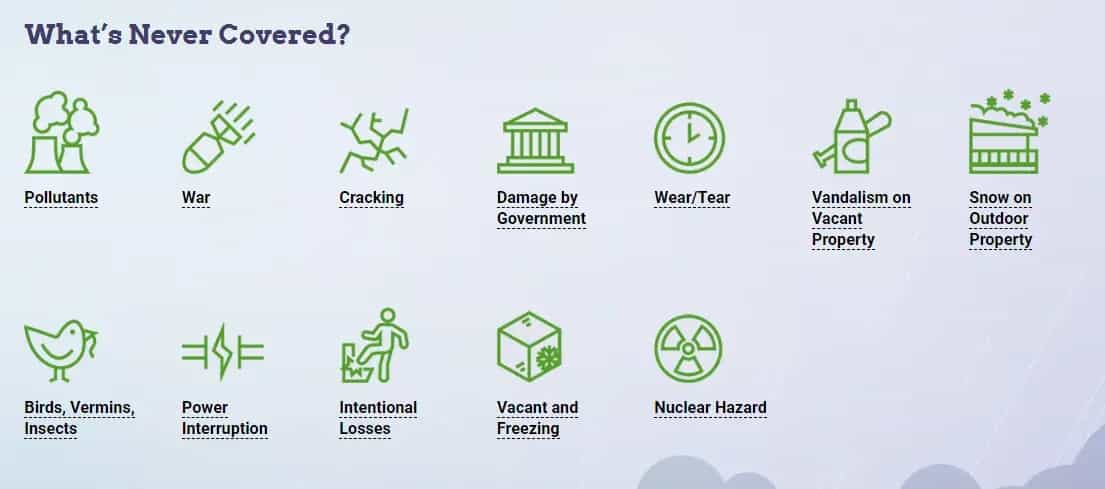
Floods, though a natural disaster, aren’t covered by Hazard insurance policies. A different system would have to be secured for torrents. Any damages incurred through neglect automatically become the owner’s responsibility.

Any spoilage that may have occurred gradually is not covered. Rust and decay, for example, don’t count as coverable expenses.

To Get or Not To Get. That is The Question. How Much Does it Cost?

The appraisal of your property influences variations in the cost. Considerations like the worth of your property, restrictions within your policy, and insurance deductible are weighed.

Experts maintain that it’s advisable to purchase a dependable homeowner cover to cover all your bases. Some offer personalized options where you can include flood insurance. Make sure you get an insurance provider you’re satisfied with and offer you the best deal for your needs. The materials from which your home is made will also contribute to the cost of your premium. The deterioration of the property may also affect how much you end up paying. Security reinforcements installed in your home will impact the total price as well. Learn more about your insurance premium here.

FAQ’s

u003cstrongu003eIs it the same thing as Catastrophe Insurance?u003c/strongu003e

Not necessarily. A slight difference exists between the two. Though sometimes interchangeably used, Catastrophe Insurance covers inevitable human-made misfortunes like burglary and human wreckage from vandalism. Hazard insurance, however, only pertains to those events that are considered “natural,” and so don’t protect you from riots and theft.

u003cstrongu003eHow Many Homeowners Insurance Do I Need?u003c/strongu003e

Your property is arguably your most significant asset; thus, you need to ensure that you have competent coverage for it. You may be tempted to cut corners in order to pay less, but you’re better safe than sorry. So get one that will cover all your bases and will guarantee that you get value for your money. If disaster strikes, you’ll want to know that you’ve prepared sufficiently for it.

u003cstrongu003eWho Should Have Hazard Insurance?u003c/strongu003e

The simple response is everybody. Because catastrophes don’t announce their occurrence, even if you live in a relatively calm place, you should get it. Fortunately, it comes as part of homeowners’ insurance packages, giving you the protection you need.

Lemonade Insurance Review: Features, Programs, Pros & Cons

lemonade ins

When it comes to insurance, many people feel like they are pouring water in the sand because they are investing in something that is intangible. The most important goal of having insurance is being safe in case an unexpected loss happens. So, you basically choose to pay a small fee at present and be financially safe in the future in case of a larger and uncertain loss that may happen to you. Uncertain and unexpected situations are a part of our lives, and we should be aware of that fact and protect ourselves accordingly.

For instance, if you own a house and you don’t insure it, everything that might happen to it in terms of damage will have to be paid for/reconstructed by you personally. In cases of fire, flood, or other random situations like a tree falling on your house- the expenses will have to be paid by you. That is why many people choose to pay the small fees and insure their properties so in cases like these, they will be backed up. That’s where insurance companies come in.

lemonade insurance
lemonade insurance

Many people are not a big fan of them, especially since the process for getting insurance can be long and complicated. Usually, the process of getting insurance can be exhaustive, and then when something happens filing a claim can be another complicated process where companies seek to keep their costs as low as they can. And then, even if there are no claims from your side, no benefits will be available to you because the companies pocket the money.

In recent times, Lemonade Insurance is a company that is getting a lot of fame because it is offering affordable, easily manageable insurance for renters and homeowners. The way that they tackle these problems is through peer-to-peer insurance techniques.

What is peer-to-peer insurance?

Peer-to-peer insurance is a system where a group of people pools their insurance premiums into a collective pot. When somebody from that group makes a claim, they take money out of the collective pot. For this to work smoothly, peers are grouped into separate groups where they pool their premiums for covering each other’s claims. What Lemonade Insurance provides is on this principle.

How does Lemonade Insurance work?

As I previously explained, Lemonade Insurance uses a peer-to-peer insurance system with collective pools. Once somebody from the pool needs to make a claim, the money is taken from the collective pot. That is how the people that are insured, will cover their losses during suffered damages. From their side, Lemonade takes a flat fee off every premium that they use for technology updates, paying salaries, and business costs.

In cases where the value of the collective pot is not enough to cover all the claims, reinsurance is used. The claims and costs that may happen in the upcoming year are impossible to predict beforehand. With that being said, the policyholders might pay more money than there are claims.

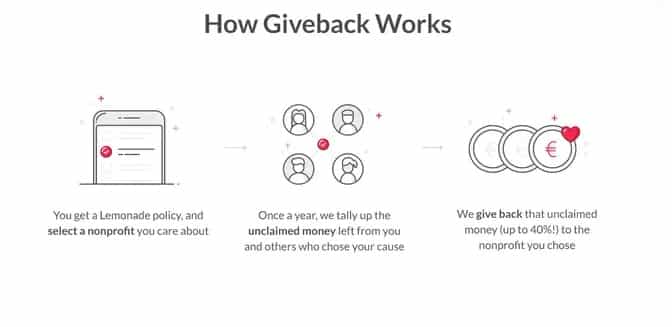
Traditional insurance companies in those cases keep the money as profits, but Lemonade, in that case, donates the extra money to charities that support the causes of your choosing. They do this through their Giveback program through which they want to “transform a necessary evil into a social good.” When you choose your policy, you will also choose a nonprofit that you are passionate about.

pasted image 0 1

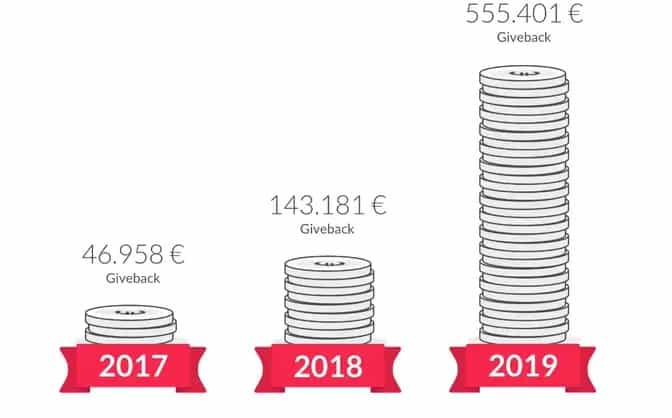
Once a year, Lemonade tallies up the unclaimed money and gives back up to 40% of that money to the charity that you chose. In 2019, Lemonade gave back more than 550.000 euros which is a significant social impact.

pasted image 0

How to get Lemonade Insurance?

Lemonade Insurance is a company that is very technologically advanced. This means that they have their own AI bot which will help you with buying a policy in a matter of seconds. There is no need for filing paperwork or making phone calls to the company.

In case you need to file a claim, the process is also very easy. You open the app, answer the questions, wait for the claim to get processed, and if it’s straightforward, get paid immediately. The Lemonade experience is not only available through their website but also through iOS and Android apps. And if you are wondering what can you get insurance for:

  • Fire damage
  • Smoke Explosion
  • Burglary Robbery
  • Vandalism
  • Windstorms
  • Hail
  • Water damage from burst pipes/leaking appliances
  • Natural disasters like floods and earthquakes
  • Living expenses in times of natural disasters
  • Personal liability coverage

The things you will be insured for depend on what type of policy you will choose. Lemonade is not available in all the states as of now. It is only available in the following states:

  • Arizona
  • Arkansas
  • California
  • Colorado
  • Connecticut
  • District of Columbia
  • Georgia
  • Illinois
  • Indiana
  • Iowa
  • Maryland
  • Massachusetts
  • Michigan
  • Missouri
  • Nevada
  • New Jersey
  • New Mexico
  • New York
  • Ohio
  • Oklahoma
  • Oregon
  • Pennsylvania
  • Rhode Island
  • Tennessee
  • Texas
  • Virginia
  • Wisconsin

Lemonade Pricing Policies

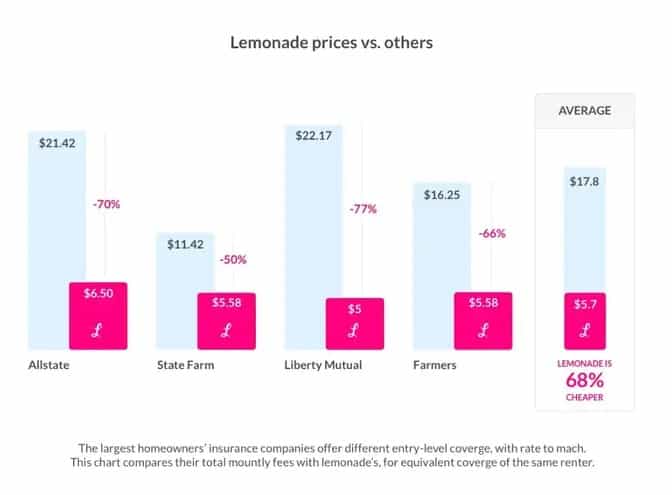
According to the Lemonade Blog, the average cost of a renter’s insurance policy is just $15.50 per month. 

But this is the average value. Keep in mind that there are different insurance policies and the prices also vary depending on the location, the condition of the place you live in, deductibles, and what type of coverage you want to have. 

The most important thing is that Lemonade is charging up to 80% less than the largest insurers. 

lemonade insurance pricing policies

On the graph above you can see the prices of Lemonade Insurance compared to other large insurance companies on a monthly level.

Advantages and Disadvantages

As with literally everything in life, Lemonade Insurance has its own advantages and disadvantages. 

Different people may like or dislike different things about the way Lemonade operates and what it offers or doesn’t offer. 

When it comes to advantages, Lemonade offers more or less the following: 

  1. It is affordable insurance for homeowners and renters, that can cost as low as $5 per month
  2. It offers free family coverage, which means that if you are insured, your family members are also insured with no additional costs
  3. It has transparent policies that are easily understandable and straight-forward for anybody
  4. It has an extremely easy process of applying for a policy
  5. It has also a very easy process for requiring claims that happens online 
  6. It is basically instant coverage because it takes just a few minutes to start with, and it doesn’t require filing paperwork
  7. It allows people to be charitable through their Giveback program which makes a positive social impact on societies 

On the other side of the spectrum, Lemonade has some disadvantages as well:

  1. It is not a good option for homeowners and renters that have very complex insurance needs 
  2. It is not good for people that require in-person service from agents 
  3. It is not good for people that want to bundle both auto and home insurance 

Lemonade is not available in all the states, it is available in more than 20 states only

Conclusion

To sum up, peer-to-peer insurance is a very refreshing system that works very well. 

It is a great option for those of us who don’t want to be bothered by filling out mountains of paperwork and then being obligated to pay high amounts of premiums each month. 

Another very good thing is the Giveback program. The leftovers from the collective pot will be used in charitable ways of your choosing that make a social impact on our societies. 

Additionally, the easy and fast application for policies that can be done on their website or apps is the best part in my opinion. 

We live in a time of digital progress and signing up for important things such as insurance online is the future. 

The technologically advanced AI bot usage is another plus in this direction. 

It is not a surprise why Lemonade is getting very popular among people. The affordability and ease with which you will be insured are refreshing. 

In times of a sudden loss, the fast and easy process of applying for claims and the fast average time of being paid on those claims can help out very much. 

The wide range of coverage and the family member coverage are some of the best advantages of Lemonade insurance. 

HARP Mortgage Replacement: Refinance with Ease

harp mortgage

Living in your dream house is everyone’s long-time dream. Being able to purchase your first home is a huge success.

Seeing the result of blood, tears, and sweat from all hard work is motivating and fulfilling. But before taking this step, there is a long process to follow.

There’s a need for a person to have their mortgage for protection. It is essential, especially for those who can’t pay the total cost of a house.

A mortgage is lending a home buyer enough resources to obtain a home. Whether they’re going to purchase a new house or have an existing home.

The mortgage will pay the builder or seller directly and create a timetable for the borrower’s payment. This will be according to the repayment that a borrower can afford.

Now, there are times that a borrower will change their mortgage, especially if they want to lower their mortgage rate.

Refinance is the term to use if a person will change their existing mortgage. Refinancing one’s mortgage means that they are trading their old one for a new one.

There are a lot of refinancing programs, but one of them is the Home Affordable Refinance Program.

HOT READ: Top 5 Cheap And Best Insurance Companies In Ohio (2026)

The Home Affordable Refinance Program or HARP has been serving people for 10 years. The program helped most homeowners underwater to refinance. Thus, helping them save money, lower rates, and build their house’s equity.

Even though HARP was terminated in 2019, the two initiatives offer similar benefits with few twitches.

The two initiatives that were federal-backed for soaring loan-to-value (LTV) ratio mortgages offer almost the same benefits as HARP. These two are Freddie Mac’s Enhanced Relief Refinance and Fannie Mae’s High LTV Refinance Option.

Before we move on to discuss these two, let’s watch a video to get a gist of the HARP Refinance Program:

What is HARP all about?

Sometimes, homeowners will find themselves underwater because of falling real estate values. A homeowner with limited equity will be the one affected by this downfall.

They will owe more mortgages worth more than their homes. The possibility of selling their home or refinancing will happen.

Mainly that it doesn’t produce enough cash. This is also alarming because tons of homeowners suffer amid a housing crisis.

In 2009, a refinance program for those borrowers with their mortgages had negative or little equity. The Home Affordable Refinance Program gives people a chance at refinancing their mortgages at cost-effective rates.

HARP developed through the years. Homeowners could now refinance to above 125% based on their home’s value without primary mortgage insurance.

Sadly, HARP expired last December 31, 2018, even after being extended twice over the years in service.

According to experts, even though HARP has its purpose, there aren’t a lot of demands. There aren’t many people applying to possess above what their home is worth.

There are nearly 3.5 million borrowers who used HARP’s programs between April 2009 and December 2018. Even today, some homeowners still have active loans with HARP, although HARP is no longer accepting applications.

What is the HARP Replacement Program?

In the year 2020, there was a minimal decline in the percentage of homeowners with negative equity. Around 1.5 million or 2.8% of most mortgaged properties are underwater.

This makes a significant dip of 21% from 2019 and a lot of difference from the 26% in 2009.

Back then, most of these homeowners in the state of underwater housing would refinance through HARP. They will work with HARP to build and aim for positive territory.

However, since the HARP ended in 2018, two federal programs presented new refinance solutions. Their offers and rates are perfect for homeowners that were underwater due to mortgages:

  1. Fannie Mae’s High LTV Refinance Option
  2. Freddie Marc’s Enhanced Relief Refinance

Freddie Mac and Fannie Mae are government-sponsored programs that buy and resell mortgages. They resell mortgages at more affordable rates for homebuyers.

People who have mortgages with Freddie Mac and Fannie Mae are the ones who benefit from these programs. They are intended for those people with rising loan-to-value ratios.

Lenders use LTV to know how much of a risk it will be to lend money to someone. These programs are designed to help homeowners whose LTV ratios are too high for a refinance with a private lender.

Homeowners who are employed and have good credit will be able to take advantage of low-interest rates. It can be applied to them even if their home values have declined.

The Freddie Mac and Fannie Mae Options have the exact eligibility requirements and features. However, there are still differences when it comes to their LTV ratios for multi-unit homes.

It is essential to know that the GSE a homeowner got a loan from is the one they need to refinance with. For example, a person can’t use the Freddie Mac high loan-to-value refinance option with a Fannie Mae-backed loan.

If a person refinances with these means, they won’t have to pay for new mortgage insurance. Mortgage insurance will bring people’s monthly payments.

There are chances that a person cannot get low-interest rates through these programs. However, it will be a more straightforward process in qualifying and benefits because of the simplified documents needed.

Although the rates may not be more competitive than other traditional lenders.

Fannie Mae’s High Loan-to-Value Refinance Options

The Fannie Mae High Loan-to-Value Refinance Options is designed to help homeowners refinance with no or little equity in their homes.

The option is beneficial for people who have an up-to-date Fannie Mae mortgage payment. Also, those people have a higher LTV ratio than the allowed ratio in a traditional refinance.

This option can earn a person a lower payment, interest rate, and shorter repayment terms in their mortgage. The minimum LTV option for a one-unit home is 97.01% in this option.

They also consider the requirements that may vary depending on how many units in a home. Another consideration is if their home is a primary or secondary one and an investment property.

For example, on a $200,000 home valued, a person can be qualified for this loan if they have $5,980 or less equity.

A person’s existing mortgage would be transferred to their new loan. They won’t need any new mortgage insurance if they don’t have one.

Compared to a conventional refinance, the document standards are less stringent around verifying income, employment, and assets.

A person can refinance their mortgage with this option as many times as they want and if they can meet the eligibility requirements.

This is a good thing about Fannie Mae’s refinance option because there’s only one chance to refinance in HARP. On the contrary, if a person has refinanced their mortgage through HARP, they are ineligible for Fannie Mae’s option.

SEE ALSO: Tips on How to Avoid Being Subjected to Predatory Lending

How Can I Pass for Fannie Mae’s Refinancing Option?

The following is a list of what you’ll need to pass the application with Fannie Mae’s option:

  1. A person should have an existing Fannie Mae mortgage starting October 1, 2017, and onwards. (Someone can look it up using this tool  if they have a Fannie Mae loan.)
  2. A person should have at least a 15-month gap between their high LTV refinance note and mortgage note.
  3. A person should be current in their payments. There shouldn’t be any 30-day delinquencies within the previous six months and 30-day delinquency within the past 12 months.
  4. A person’s mortgage should not have been refinanced by Fannie Mae’s DU Refi Plus, Refi Plus mortgage, or HARP.

Freddie Mac Enhanced Relief Refinance

Like Fannie Mae’s LTV option, the Freddie Mac Enhanced Relief Refinance program benefits those with minimal equity. This program can be beneficial to those homeowners who have little equity in their homes and want to have competitive rates.

Homeowners currently have Freddie Mac, currently on their payments, and aren’t eligible for a traditional refinance and are qualified to apply for this option.

The minimum LTV option for a one-unit home is 97.01% in this option. The minimum LTV may vary depending on how many units are in their home. Also, whether it is an investment property or a primary or secondary residence.

Paying for a new mortgage is not required in this program, and they can transfer your existing mortgage insurance. A homeowner also doesn’t need to provide that much documentation, unlike with a conventional refinance.

Through the Freddie Mac program, refinancing one’s mortgage as much as they want is possible. Unlike in HARP, a homeowner can refinance their mortgage for one time.

On the other hand, if a homeowner was a beneficiary of HARP, they cannot refinance with Freddie Mac’s program.

Below are the requirements a person needs to meet to be able to refinance with Freddie Mac Enhanced Relief Refinance:

  1. A person should have a Freddie Mac mortgage note starting November 1, 2018, and onwards. (Someone can look it up in this tool if they have a Freddie Mac loan.)
  2. There should be a 15-month gap between the high LTV refinance note and the mortgage note.
  3. A person should be current in their payments. There should be no 30-day delinquencies within the previous six months and 30-day delinquency within the past 12 months.
  4. Their mortgage should not have been refinanced through HARP previously.

What’s the Difference between the New Programs and HARP?

Although the new programs have similarities with HARP, there are still a few differences between them.

HARP allows homeowners to refinance their mortgage once, and there’s no limit in their programs. If a homeowner has already used HARP’s programs one more time, they cannot apply for the new programs.

At HARP, there’s no required loan age, unlike the two programs that require a loan age. Fannie Mae and Freddie Mac only refinance underwater loans that are at least 15 months old.

Loan age allows the lenders to have the time to know the payment history of the borrower and decreases loan churning. Loan churning is considered predatory lending.

Fannie Mae and Freddie Mac base their programs on the LTV ratio. They require homeowners to have a starting LTV ratio of 97.01% for homes built for single families.

The required percentage is a little higher than HARP’s 80% minimum LTV ratio. On the contrary, the two programs have no LTV maximum, just like HARP.

How Can I Register for HARP Replacement Programs?

Suppose a homeowner is interested in refinancing with HARP’s replacement programs, calling the lender/servicer is the first step. Call the mortgage lender or services to know if their loan is supported by Freddie Mac or Fannie May.

They can also contact Fannie Mae or Freddie Mac directly to know more about their programs:

  1. Fannie Mae – Contact (800) 2FANNIE from 8 a.m. to 8 p.m. ET. They can also use Fannie Mae’s loan lookup tool online and visit their page for Know Your Options.
  2. Freddie Mac – Contact (800) FREDDIE 8 a.m. to 8 p.m. ET. They can also use Freddie Mac’s online mortgage lookup tool and visit Freddie Mac’s home page.

Learned Something New?

Refinancing might give benefit from these programs, especially if a person needs dire help with their mortgage.

Refinancing makes their monthly payments and interest rates lowered, and they can save more money. It is not just that; it can also help people grow equity quickly federal-backed initiatives, federal-backed initiatives, which is a long-term method for establishing wealth.


Health Insurance Laws: State Requirements and Penalties

health insurance

If you have health insurance, you might have heard about the Affordable Care Act (ACA), signed into law in 2010. The ACA aims to provide more affordable health insurance coverage for the citizens of the United States. It includes provisions for Medicaid eligibility for low-income individuals and tax subsidies to make insurance more accessible. This act mandates that everyone must have health insurance, and failure to have it results in a tax penalty.

But what about now? Do the same rules still apply to those without health insurance? Do people still need to pay the penalty for not having coverage? In this article, we will discuss the updates on the rule and everything you need to know about health insurance coverage.

HOT READ: Understanding Life Insurance vs. Health Insurance

Why is not having health insurance considered illegal?

The Affordable Care Act’s Mandate, also known as “Obamacare,” required eligible Americans to obtain health insurance coverage that meets specific standards, known as minimum essential coverage. This requirement is called an “individual mandate.” While not having minimum health insurance is not a crime, it does result in a tax penalty, which was previously referred to as the “shared responsibility penalty.” The ACA also established a premium tax credit to help offset the cost of purchasing insurance through the healthcare marketplace.

As of January 1, 2019, it is no longer mandatory to have health insurance coverage at the federal level. However, several states still require their citizens to have insurance. The ACA continues to exist, but no penalties will be imposed on Americans who choose not to obtain health insurance. Approximately four million Americans each year opt to forgo health insurance now that the penalty has been lifted.

The new American Rescue Plan of 2021 states that all taxpayers with insurance purchased from the ACA Marketplace are eligible for the ACA premium tax credit. This is a significant advantage compared to the previous situation, where filers were deemed ineligible if their income exceeded 400% of the federal poverty line.

States Requiring Health Insurance

While the federal government no longer requires individuals to have health insurance, a handful of states have mandates in place regarding coverage or are trying to pass laws to make it mandatory. It is important to note that some states have imposed health insurance tax penalties, meaning that citizens must pay a fine if their insurance does not meet the state’s requirements. The following states currently require their citizens to pay a penalty if they do not have adequate health insurance:

  • – New Jersey
  • – California
  • – Vermont
  • – Massachusetts
  • – District of Columbia (Washington, D.C.)

Other states attempting to pass legislation to require health insurance coverage include:

  • – Connecticut
  • – Rhode Island
  • – Hawaii
  • – Maryland

For states with mandatory health insurance, the rules for obtaining and maintaining coverage are similar to those outlined by the ACA. Individuals can obtain insurance through the state-run health insurance marketplaces.

Duration before Being Subject to Penalty

Individuals have a short coverage gap of approximately three months before they become subject to a penalty. Even if a person has multiple temporary coverage gaps in a year, the exemption only applies to the first gap. If you have a coverage gap of three months or longer, you are not exempt from any of those months. The short coverage gap rules apply only to the first taxable year when there is a continuous period of coverage.

Penalty Prices for Not Having Health Insurance

For states with mandatory health insurance, tax penalties apply for every month that an individual is not covered by health insurance. The Tax Penalty of 2018 states that individuals must pay 2.5% of their total household Adjusted Gross Income. This amounts to approximately $695 per adult and $347.50 per child. The tax penalty serves as a deterrent for not obtaining health insurance and can be seen as the cost of not having coverage. Over time, the cumulative cost of not purchasing health insurance can be significant. Additionally, individuals put themselves and their families at greater risk of financial debt due to unforeseen medical expenses.

READ ALSO: Top 22 Connecticut insurance companies list – Comprehensive one

Options for Health Insurance Coverage

While there is no longer a federal mandate requiring health insurance coverage, there are still options available for obtaining coverage. Some employers offer different types of health insurance coverage as an employee benefit, which can provide affordable options without the need to shop around and compare prices.

Other options for health insurance coverage include:

1. Enrolling in a Healthcare Cost-sharing Program

Consider enrolling in a healthcare cost-sharing program if you still lack health insurance. This can provide an alternative to traditional insurance plans.

2. Applying for Medicaid

Medicaid is a government program that provides health insurance coverage for low-income individuals and families. Eligibility for Medicaid varies by state and is based on income and family size.

3. Enrolling During the Open Enrollment Period

The open enrollment period is the best time to obtain health insurance coverage. This period is updated annually, so it’s important to check the dates for the current year.

It is important for individuals to be informed consumers when it comes to healthcare. Negotiating discounts with healthcare providers can be challenging, but it is possible in some cases. Large member groups may have better negotiating power and can potentially secure better discounts. However, not having health insurance increases the risk of the financial burden if expensive medical care is needed and the individual lacks the funds to pay for it.

In conclusion, while it is no longer a federal requirement to have health insurance coverage, it is still important to consider obtaining coverage to protect against unexpected injuries and medical emergencies. Take the time to research and explore health insurance options that best suit your needs, priorities, and budget. Having health insurance provides a safety net and peace of mind in case of unforeseen healthcare expenses.

Best Life Insurance: a Comprehensive Look at Its Meaning and Importance

planning secure future financial

Most individuals go through a significant portion of their adult lives without considering life insurance. We all understand the discomfort of facing our own mortality, but the alternative is even more daunting. The thought of navigating life without any concrete plans for the well-being of our loved ones after we’re gone is truly terrifying. Life insurance is specifically designed to protect your loved ones and dependents in the event of your passing. It provides a payout to your designated beneficiaries. Over time, life insurance policies have expanded to offer options for generating money and acquiring assets without incurring taxes. My recommendation is to invest in life insurance while you’re young and the premiums are affordable, rather than waiting for a tragedy to strike. Before delving into the reasons why life insurance is a valuable investment, here’s a helpful video to give you a better understanding of it.

What is Life Insurance?

Typically, people only consider their financial affairs in terms of life and death when they have families. However, I’m here to tell you that purchasing life insurance is the best decision you can make for yourself. Getting life insurance before starting a family or establishing a business allows you to secure a more affordable policy. So, how does it work? In exchange for your premium payments, your insurance provider offers a lump-sum payment, known as a death benefit, to your chosen beneficiaries. These can be authorized individuals who will receive the payout upon your passing. The amount of the annual premiums you pay depends on the terms of your policy. If you, as the primary beneficiary, die before the policy term (typically 20 years), your family will receive the specified payout. This payout can help cover funeral expenses, debts, and property costs after your passing. For more detailed information, Investopedia provides further insights into how life insurance works.

Naturally, before making such a significant commitment, you’ll want to fully understand all aspects of life insurance. To begin with, there are certain factors to consider that will help you assess your coverage needs.

The coverage you receive will depend on:

  • Your reasons for obtaining life insurance (asset accumulation, wealth protection, family coverage, etc.)
  • Your life stage (married, in school, starting a business)
  • Your age

Over time, you’ll gain peace of mind knowing that your dependents will be taken care of, even when you’re no longer here.

6 Important Reasons You Need Life Insurance

As I matured and started my own business, I realized that I would eventually want to get married and have a family. All of these milestones required a solid financial plan to ensure both my short-term and long-term goals could be achieved. Here are some key reasons that helped me make the commitment to life insurance:

1. You Never Know: Death is unpredictable. You could go to sleep one night and never wake up. As frightening as that sounds, life insurance helps provide the necessary financial support for your family to cover outstanding payments, mortgages, and even school tuition in your absence.

coffin bearer carrying casket fu

2. To Leave An Inheritance: Offering your family financial peace of mind during the mourning process is crucial. By designating your family as beneficiaries, even if you have no other substantial wealth, you can leave them something valuable. This ensures that your children’s future financial needs are taken care of, including providing them with a quality education.

planning secure future financial

3. To Pay Off Debts: Debts can be overwhelming to handle, especially when combined with the burden of your absence. Life insurance alleviates this concern by allowing your loved ones to pay off any outstanding debts you may have, such as mortgages and student loans.

young woman using smart phone ch

4. You Have a High-Risk Lifestyle: If, like me, you engage in hobbies or have a job that exposes you to more risks than the average person, life insurance provides peace of mind. It allows you to fully enjoy the thrills of life, knowing that the next generation will be taken care of in case of any unfortunate events.

concept solution domino effect s

5. Burials Aren’t Cheap: Just because you’ve completed your journey on this earth doesn’t mean you should burden your family with the responsibility of paying for your funeral expenses. Life insurance ensures that your family can mourn in peace by providing the necessary finances to cover funeral costs.

bereavement 1239415 480

6. You Have a Business: Life insurance is not only beneficial for individuals; it can also safeguard businesses from financial distress, liability, or instability in the event of an owner or partner’s death. In such cases, you may need to buy out the deceased partner’s share to keep the business running smoothly. Life insurance also serves as a reliable means to protect and accumulate assets, enabling you to leave behind financial security for your family. Entrepreneurs particularly benefit from life insurance as a safety net to pay employees or shareholders in case they are unable to.

hands holding piece blank jigsaw

Who Needs Life Insurance?

Life insurance is not only necessary for heads of families with dependents. Various factors influence whether individuals should obtain life cover, as outlined by Forbes. Although it is recommended for everyone, there are specific situations where life insurance becomes an urgent necessity. Consider the following list to determine if it’s time to consult a financial advisor:

who needs life insurance

1. New Families

Starting a family is a significant step, and it’s important to approach the responsibility with a solid long-term financial plan. Investing in life insurance before marriage will be more affordable, as there will be fewer dependents initially. If you plan to have children, there will come a time when you and your spouse may need to take leave to care for the baby. In such cases, having a sound financial plan becomes essential.

2. Individuals with Dependents

If you already have a family that relies on you financially, obtaining life insurance is crucial. This extends beyond your immediate family to include individuals like housekeepers or caregivers who have become part of your family. It may be difficult to find suitable replacements for them, so securing their financial well-being is of utmost importance.

3. Young Singles

Even as a bachelor(ette), there may be people affected by your death, so it’s essential to have a plan in place to cover your burial costs. Taking proactive steps in advance ensures that you will have a dignified funeral. Additionally, life insurance for single individuals is relatively inexpensive as they are typically in good health.

4. Individuals in Debt

If you are in the midst of repaying significant debts, you do not want to burden your family with inheriting your financial obligations. Whether it’s a mortgage, student loan, or car loan, life insurance provides financial security for both you and your loved ones. Your estate won’t have to be liquidated in your absence, and your family can have peace of mind.

5. Childless Couples

If your partner passes away suddenly, their life insurance can supplement their lost salary, enabling you to maintain your current standard of living. Even if the surviving partner has a substantial income, they may still need assistance with funeral expenses.

6. Employed Individuals

Your job may offer some form of life insurance coverage, but often, it may not be sufficient, and additional coverage may be necessary. Furthermore, job circumstances can change, such as unemployment or changing employers, so having non-conditional coverage is essential.

7. Entrepreneurs

Whether you own a business or hold shares in a company, obtaining separate life insurance coverage for your investment is wise. Businesses can be volatile, and protecting your business obligations in the event of a partner’s death or withdrawal is crucial.

8. Individuals Dependent on Parents

This is more common than you might think. Many people take out insurance policies on their parents to ensure they receive payouts when their parents pass away. By including yourself as a dependent on their policy, you can safeguard your stake in the coverage. You can also find solace in knowing that you’ll be able to give your parents a dignified burial. Additionally, as age advances, health issues tend to arise, which can become a financial burden. Obtaining life insurance, as stated by Business Insider, gives you the peace of mind that everything will be taken care of.

9. Life Insurance for Children

Despite not having any dependents, there are numerous reasons why purchasing life insurance for your children is beneficial. Children often fall ill, and some families may struggle to afford medical expenses. Life insurance for children can provide financial support during these difficult times. Additionally, securing coverage at a young age ensures that they have protection for years to come.

10. Preparing For Retirement 

Death isn’t the worst thing that could happen to you. You could live to a ripe old age and find that you can’t work and so need to have a reliable income for your upkeep. Ideally, you’d have started saving early for your senior years, but if you didn’t, it’s still possible to get cover that old. You likely won’t have any dependents at that point and just need to make sure you prepare for your burial. I’ll remind you that it’ll be costly because of all the health problems that ensure with age.

With that being said, the amount of coverage a person needs isn’t a straight answer. The variables that apply to your situation affect your needs, from age, to gender, and social status. So take everything into account and also consider how much you can afford and reach out to an insurance representative to help you calculate your needs.

Different Types of Life Insurance

As you may have guessed, life cover comes in many variations to incorporate the different needs various customers have. The insurance industry continually strives to provide tailored covers for its customers. In light of this, allow me to help you break down what they are and what each policy offers:

  • Term Life Insurance

This remains functional within a restricted time frame. Your beneficiaries receive a settlement if your death occurs within this period.

If you live longer than the length of the agreement, your insurance expires, and you receive no payout. Very few insurers allow you to change and redeem it as a full life cover without you running a loss.

Usually, the fee isn’t fixed and may change over the years. Term Life cover benefits include more massive payouts for your dependents. It’s also less expensive than other alternatives.

Within term life, different versions like Group Term Life are offered by companies for their employees. Another type is Supplemental Life Insurance which consists of untimely death and dislocation cover.

  • Permanent Life Insurance

With this type of insurance, your coverage never expires. This comes in several variations, from whole life insurance to universal life cover.

  1. Whole life insurance covers you for your entire life and pays a settlement when you die for your loved ones. The premiums you’ll pay are fixed when you get the cover, so you’ll pay the same amount for as long as you live. Your health and youth work in your favor here since your charges will be cheap.
  2. Universal life cover, on the other hand, affords you more flexibility when it comes to your charges and premiums. Policyholders here can adjust the cost schedule of their payments after making the first payment. This way, you can grow your stake while simultaneously maintaining a life cover.
  3. A branch called indexed universal life insurance allows customers to reduce their charges to a stable account. This is a secure investment that isn’t influenced by inflation or economic changes.
  4. Joint or Survivorship life cover is for couples that decide to get a policy together in structured first-to-go or second-to-go coverages.

With the first, a settlement is made after the first party’s death to the named beneficiaries. The second only kicks in after both parties have died, and are commonly used with mortgages in mind.

  1. Variable life insurance is often viewed as a perennial life cover with an endowment factor. The cover’s worth is invested in branch accounts that can accumulate interest as the accounts expand.
  2. Mortgage life insurance functions like the rest, only there’s no specified beneficiary, the payout is made to your homeowner’s loan usurer. So even if you pass on, your house debt will be settled.
  3. If your beneficiary dies, Dependent Life Insurance pays out to you to help with funeral costs. The payout is minimal and covers “separated” spouses, older children, stepkids, or adopted kids.
  4. Final expense life insurance is made to settle hospital and burial costs after you’re gone. It’s also known as burial insurance and pays explicitly for your funeral since these are quite expensive

Figuring out that you need life insurance is the first step. Now that you’ve learned a little more about all the different types of insurance, things should be a little less confusing. We’re here to help you break through the clutter and learn more about the most popular kinds of life insurance, so you can decide what’s best for you.

Final Word

One of life’s most uncompromising truths is that we’ll all die at some point. So the best you can do is to ensure that when your time comes, you’ve prepared sufficiently not to leave your loved ones to suffer.

With Life insurance, you can help care for your family beyond your grave, allowing them to grieve you peacefully. So take the step to prepare for the unknown future and get inspired today.

We’d love to hear from you if there’s something you need us to compare among these insurance giants. 

Understanding Ladder Life Insurance: A Comprehensive Guide

ladder insurance

If you’re looking to adjust your life insurance coverage without the need to contact a representative or seek approval, Ladder Life Insurance has the perfect solution for you. Ladder is an innovative tool that allows you to customize your life insurance coverage to suit your needs. It’s designed for individuals who want to secure their future but may not have the time or financial resources to do so. With Ladder’s easy and affordable monthly payments, you can start planning for your future while you’re young and healthy.

History of Ladder Life Insurance

Ladder Life Insurance was founded in 2015 and has since developed an online platform for life insurance applications. Originally comprised of licensed producers and third-party administrators, Ladder has quickly become one of the fastest-growing insurance companies in the industry. While they initially focused on other insurance products, they shifted their focus to life insurance after their launch two years ago. The Ladder has also partnered with Fidelity Security Life and Allianz to ensure nationwide coverage. These partner companies are responsible for providing life insurance coverage, while Ladder acts as the platform through which customers can apply and manage their policies.

The Ladder Life Insurance Offers

With Ladder Life Insurance, individuals can apply for coverage plans of up to three million dollars entirely online. The entire application process can be completed online, eliminating the need for travel or in-person exams. It’s important to note that this online application process is only available for coverage plans up to three million dollars. If you require coverage beyond that amount, additional underwriting may be required.

Ladder offers term life insurance policies with a wide range of prices. These policies are available for individuals between the ages of 20 and 60. Depending on your specific circumstances, your application may be approved instantly or require additional steps such as a medical exam. Ladder understands that circumstances change over time, and they allow you to adjust your insurance coverage at any time to align with your changing financial situation and needs. When reducing coverage, the price is adjusted proportionately, while adding coverage results in separate pricing.

Is Ladder Life Insurance Worth It?

Choosing to purchase life insurance from Ladder can be a smart decision in today’s uncertain world. Life insurance provides peace of mind and ensures that your loved ones are taken care of, regardless of what may happen. However, it’s essential to weigh the pros and cons of Ladder Life Insurance to determine if it’s the right fit for your unique needs.

Pros and Cons of Ladder Life Insurance

Insurance companies all have their unique strengths and weaknesses. So you must weigh them against what matters most for the type of life situation you’re in now.

Otherwise, you’ll be stuck with it later on down the line. Check out these advantages and some drawbacks of Ladder.

Pros

  1. Coverage of up to eight million dollars for as low as one hundred dollars.
  2. Increasing and decreasing coverage is allowed for policyholders long-term. Step up or down your levels depending on what’s best at any given moment in life.
  3. One-stop-shop for people in the United States. You have two insurance companies to work with, to cover all 50 states plus Washington D.C.
  4. Do not have to go through a medical exam (for most applicants). But, it is difficult to gauge which policies require one and who would need them.
  5. Take the guesswork out by controlling underwriting decisions and risk analysis. It makes these determinations quicker than your average business day!
  6. Has a reputation for excellence. They’ll take care of any concerns you have through their online platform or over the line, and they’re quick to respond as well!
  7. Financially stable and Rated-A, enough to pay any claims by policyholders if something goes wrong.

Cons

  1. Only offers term life insurance coverage. Universal and whole-life coverage isn’t available under Ladder. For these policies, you would need to look elsewhere. 
  2. More straightforward online policy application for some. What other people don’t realize is that these require a lot of information from you. Occupations, incomes, social security numbers, and more are needed, which may pose some apprehension.
  3. There are no riders offered for term policies.
  4. No insurance policy is available for ages 70 and up. Coverage can only be purchased by people between the ages of twenty to sixty years old.

Ladder Life Insurance Rates Factors

Ladder is an independent company that provides you with a life insurance policy rate after considering a few different factors.

  • Low rates are usually the case if ever the person has a spotless driving record. 
  • Younger applicants can expect a lower rate since their life expectancy will be longer. 
  • Lower rates are also in store for individuals who are generally healthy. 
  • Individuals without a history of hereditary diseases can also have lower rates. 
  • People with pre-existing medical conditions may expect higher rates.
  • Lifestyle is another factor. People who enjoy thrill-seeking hobbies would face higher rates. 
  • Persons who have dangerous jobs can also expect a higher premium.

What’s more, Ladder has you covered. They will help to find a great insurance policy that won’t break the bank.

Their agents are not commissioned, so they have your best interest in mind when choosing a customer plan. Rather than trying to make an easy sales commission off you!

How to Apply for Life Insurance through Ladder?

Once you’ve decided to work with Ladder, the first thing to do is head over to their website. Once there, click on. After that, the next step is choosing your coverage specifics:

  1. Pick a specific amount and term length for yourself! Alongside this choice- process, they have a calculator which can help estimate how much money you may need in life insurance.
  2. After inputting all this information into their site (which includes age, health habits like smoking or drinking, and lifestyle details), it will provide an estimated cost per month to better plan financially!
  3. It’s just a few minutes before you find out if your application is accepted or not. Depending on the kind of insurance policy, you might need to be examined by doctors as well!

More About Ladder Life Insurance

Ladder’s term life insurance is a product that can take care of your dependents. It may be an excellent choice, but it isn’t for everyone.

People beyond twenty to sixty years old might want to look elsewhere for their policy needs. Because Ladder does not provide coverage past those ranges and will charge more than other companies that offer these options. 

Dependents need protection from unforeseen circumstances such as death or disability. So, Ladder life insurance is one of the perfect options when considering coverage plans.

Ladder offers a simple and easy-to-navigate online application with quick underwriting decisions. 

  1. Their flexibility in adjusting coverage is one of their many attractive features. Still, they also offer seamless transactions available anytime without penalties or fees.
  2. Ladder was built for those who live busy lives but still want peace of mind. It comes from having an insurance plan tailored specifically to your needs at all times.

Common Questions About Ladder Life Insurance

Check out these answers to common questions about Ladder life insurance.

Are Ladder’s rates competitive?

Ladder offers competitive rates for term life insurance. Besides, Ladder’s rates are not the lowest, but they consistently beat out the average prices of top insurers.

They also offer more coverage without a medical exam with lower premiums than typical no-exam policies.

Will I Need a Medical or Laboratory Exam?

Each client is underwritten on an individual basis making it difficult to predict whether you will need it or not. In most cases, you don’t need a medical exam, but the company offers convenient exams and costs if you do.

Can I Still Get Coverage Even With Some Health Problems?

You may be able to get insurance, but it all depends on your history and current state of health. Likewise, you may need a doctor or specialist referral before being accepted for coverage by the company.

Will Ladder Life Application Hurt My Credit Score?

Insurers look at your credit score history. They check the timeliness of payments or if you’ve filed for bankruptcy. 

In addition, the request for this data is a soft inquiry and does not impact your credit. But it could affect what premiums an insurer charges for someone with bad scores.

To Sum Up!

In summary, Ladder Life Insurance is a young but reputable company that offers unique services in the insurance industry. They prioritize customer satisfaction and work with trusted partners to provide reliable coverage options. If you’re interested in learning more about Ladder Life Insurance, be sure to check out their website for more information.

The Benefits & Process of Buying a House with Cash

buying house with cash

Buying a house is a safe and practical investment option. Nowadays, there are various ways to purchase a home, and you might be wondering what the best method is. If you’re searching online, you’ll come across many purchasing options with different offers, which can be overwhelming. This article aims to provide you with the best option to buy a house and outlines the factors you need to consider before making your purchase.

Did you know that buying a house with cash can help you save money? To learn more about this option, check out this informative video:

If you have the means, buying a house with cash has several advantages. Firstly, it helps you stand out as a buyer, especially in a competitive market. Sellers are more likely to take an all-cash offer seriously and favor it over other bids. Secondly, an all-cash offer increases the likelihood of sealing the deal quickly. Sellers prefer buyers who can close the deal promptly. Lastly, buying a house with cash allows you to avoid monthly fees and interest charges, ultimately leading to a happier and more financially secure life.

Steps to Buy a House With Cash

The process of buying a house with cash differs from purchasing with a mortgage. Here is a step-by-step guide for buying a house outright:

  1. Ensure that you have all the necessary funds in one place and obtain a letter from the bank as proof of available funds.
  2. Search for the perfect house that suits your needs and budget.
  3. Make an all-cash offer, including a contract contingency for your protection.
  4. Find a settlement agent who will facilitate the transaction and record the details.
  5. Conduct a thorough house inspection to identify any potential issues.
  6. Arrange for a land survey to establish legal boundaries and avoid future problems.
  7. Purchase home insurance to protect your investment.
  8. Complete the final walkthrough of the house, exchange contracts, and pay the balance.

Factors to Consider When Buying a House With Cash

In addition to your financial status, there are other important factors to consider when buying a house. These include:

  • Negotiating with trusted realtors to ensure you get the best price for your home.
  • Considering your future needs, as your life circumstances may change.
  • Choosing a house that you can comfortably afford and that meets your needs, without the need to show off.
  • Evaluating your emotional state and considering your true feelings about homeownership, as it is a long-term commitment.

Cash or Mortgage: Which is Better?

When it comes to buying a house, cash, and a mortgage are two popular options to consider. To determine which is better for you, consider the following:

  • Buying with cash makes you appear confident to sellers, increasing your chances of getting the deal.
  • Buying with cash is faster compared to the lengthy process of obtaining a mortgage.
  • Buying with cash involves less hassle since there are fewer contingencies and no need for appraisals.

Pros and Cons of Buying With Cash

Before deciding to buy a house with cash, it’s important to weigh the pros and cons:

Benefits of an all-cash offer include:

  • The ability to negotiate a better price with sellers.
  • Avoiding the stress of monthly payments.
  • Not being restricted by credit scores and inspections.

Drawbacks of an all-cash offer include:

  • Reducing your savings significantly.
  • Missing out on other investment opportunities.
  • Potentially overstretching yourself financially.

In conclusion, buying a house is a significant achievement, and whether you choose to buy with cash or a mortgage, it’s essential to consider various factors. Focus on what benefits you in the present and future, and seek expert advice if you’re unsure about the best approach. Lastly, don’t forget to share this post with others who might find it helpful!

Top San Francisco Immigration Lawyer

Immigration Lawyer

Are you interested in immigrating to the United States?

Would you like to familiarize yourself with the process and the various methods available to obtain a green card?

We recommend visiting the website of Litwin Law, a San Francisco Immigration Lawyer.

litwin

Litwin Law offers personalized services tailored to your specific needs and timeline.

With their extensive experience, they are well-versed in the latest legal resources and laws and employ a proven method to ensure the strongest possible case for you.

HOT READ: Best Mesothelioma Lawyers in Houston, Texas

Litwin Law has offices located in:

Santa Clara office:
5201 Great America Parkway, Suite 320
Santa Clara, CA 95054
Phone: 408-998-1159
Local: 408-214-0859
Map and Directions

San Francisco office:
425 Market Street, Suite 2200
San Francisco, CA 94105
Phone: 415-392-3300
Local: 408-214-0859
Map and Directions

South San Francisco Office:
1435 Huntington Ave, Suite 336
South San Francisco, CA 94080
Phone: 650-588-7100
Local: 408-214-0859
Fax: 650-588-4302
Map and Directions

You can also contact them for a FREE 10-minute consultation at:

  • 650-490-4545
  • 408-214-0859

Understanding Title Insurance: Types & Coverage Explained

what is title insurance

Often, the purchase of a house is one of the most significant investments you’ll make in your lifetime. Disputes over the property can be a nightmare, especially if someone else claims legal ownership after you’ve already paid in full. This can be a long, stressful, expensive, and time-consuming process. Title insurance is designed to help mitigate these risks. In this article, we will provide you with all the information you need to know about title insurance.

What is Title Insurance? Title Insurance 101

But before we delve into the main topic, here is a helpful video that explains title insurance in more detail.

So, what exactly is title insurance? In this context, the title refers to the evidence of lawful ownership or possession of property. Title insurance protects various parties, including real estate owners, lenders, homebuyers, and related agents, from losses, damages, or loss of property due to problems with the property’s title. Depending on the policy, title insurance companies will pay for specified legal damages resulting from disputes that occur after the sale. As a potential buyer, it’s crucial to ensure that the title is clear and free from ownership claims to avoid future costs.

One key difference between title insurance and other types of insurance is the events they protect against. While other insurance policies cover you for unforeseen future circumstances, title insurance protects you from past issues. In some cases, instead of title insurance, you can obtain a warranty of title from the buyer during private transactions. This document guarantees that the seller has the right to transfer ownership and that no one else owns the property.

How Does Title Insurance Work?

So, how does title insurance work? Having a clear title is essential in real estate transactions. Title companies typically conduct a title search to ensure there are no liens or claims before issuing title insurance. A title search confirms the legal ownership of a property by examining public records for any claims. In simple terms, it ensures that the seller owns the property or has the right to sell it. If the title search comes back clear, the company will proceed with the underwriting process. They assess potential issues such as unresolved building code violations or erroneous surveys. They also search for undiscovered issues and provide a quote based on the associated risks. If there are too many challenges with the title, title companies may refuse to provide a policy.

Some commonly filed claims against titles include easements, mortgage or loan liens, back taxes, and home equity lines of credit (HELOC). Title insurance protects against events such as another party owning the property, forgery or fraud on documents, encumbrances like liens or outstanding lawsuits, problematic records, encroachments, and unrecorded easements, and other restrictive agreements that affect the value of the property.

title insurance
title insurance

Types of Title Insurance

Two types of title insurance exist to protect all pivotal participants in a real estate deal. These two types are owner’s title insurance and lender’s title insurance.

Lender’s Title Insurance

A lender’s policy is liability protection for lenders, especially on mortgages. If claims come up during the duration of the mortgage, this policy protects them.

Lender’s insurance typically lasts the length of a mortgage. Lenders require a borrower to get it to protect them from loss.

Owner’s Title Insurance

An owner’s title insurance isn’t compulsory, but it is an excellent idea. It protects you as a homebuyer.

To err on the side of caution, even if you get a warranty deed from the seller, the policy can still help. A warranty deed confirms that the title is clear, but the policy enables you to cover the costs in case of an issue.

Title searches are not bulletproof, so a bit of extra help is always welcome.

What is the Coverage of Title Insurance?

Title insurance helps you get Insurance’s Importance in Financial Planning. The classic premium of title insurance is for comprehensive coverage.

The comprehensive coverage includes the homeowner’s title insurance policy and the lender’s policy.  The lender’s policy is just as we discussed above in the types of title insurance.

However, the homeowner’s policy included more than what is mentioned above. Here are some coverages of a homeowner’s policy.

Coverage for Building Permit Violation

This coverage allows the policyholder to remove structures that the previous owner built without the necessary permits.

Boundary walls and fences are excluded from this policy. It covers up to $25,000 after a deductible.

Address Coverage

It helps to ensure that the property address and the address on the insurance document are the same.

Zoning Coverage

If a policyholder needs to remove or fix an improvement for violating zoning laws by force, they will be covered by zoning coverage.

Restrictive Covenant Violation

Sometimes, someone may make an effort to force a restrictive contract on you because of a violation before the policy date. This coverage helps to protect you from losing your title when such events occur.

Post-policy Coverage

This one simply protects you from ownership claims after the policy.

Supplemental Taxes

It protects you from supplemental taxes for previous construction, ownership change, or change of use.

Trust Coverage

It extends the protection of the policy to feature a trust that you create.

Subdivision Coverage

Subdivision coverage is for land that wasn’t correctly divided before purchase that limits the policyholder from:

  1. Closing sales
  2. Getting a building permit
  3. Getting a loan

Subdivision coverage covers up to $10,000 after deductibles are removed.

Encroachment Coverage

It protects you from people building structures that encroach on your insured land. If they are building boundaries like walls or fences, however, it does not count.

Coverage for Structure Damage Due to Resource Extraction

It protects existing structures and future improvements on your landscape. It also covers damage caused by other people using the land to extract and develop water, minerals, and other substances.

HOT READ: Satisfaction Of Mortgage? Why Do You Need It? High-impact reasons to prioritize in the modern age

The Value of Title Insurance

Title insurance is a little-known but extremely valuable insurance type. People who are familiar with land and housing disputes are better equipped to tell you how strenuous it gets.

Dealing with such a terrible card as real estate disputes without insurance isn’t an ideal situation. Here are three reasons why title insurance is extremely valuable.

  1. It helps in protecting its policyholders from numerous unknowns.
  2. It offers a beneficial protection type at an excellent rate.
  3. It is beneficial for the United States as a whole, not only as an individual.

The Cost of Title Insurance

Title insurance has a one-time premium. The average is between 0.5% and 1% of the home’s total value. 

Some states do not regulate title insurance, so the price may vary. The premium payment is typically required at closing.

Is Title Insurance For You? How to Know If You Need Title Insurance

Mortgage lenders usually require title insurance from homebuyers. However, they only demand this for their protection (lender’s title insurance).

If you want to protect yourself from the responsibility for title issues, you will need to get a separate policy for yourself.

That being said, title insurance policies are for homebuyers and mortgage loaners. So if you are in this category, you should get a title insurance policy.

Sometimes, title searches may come up clean because of unrecorded data, so they have a limit. Except you don’t mind paying all the bills for future title claims, we advise that you get title insurance.

What Risks Come with Not Having Title Insurance?

The absence of title insurance puts transacting parties at risk in case a title defect occurs. After closing a deal for your dream house, you can stumble on issues that you will pay for from your pocket without title insurance.

Some of these risks are:

  1. Back taxes
  2. Unrecorded liens
  3. Unrecorded access rights
  4. Other defects 

Title Insurance Shopping

It is common to get recommendations for title insurance companies from your title search company, mortgage lender, or real estate agent. However, you can shop around because it’s not compulsory to follow them.

Every company offers different rates, so you will do your best to find the ones that work better for you. Things you should consider while shopping includes:

  1. A reputable company
  2. Stability since your home will be around for a long time
  3. Willingness to answer all your questions before and after purchase

Making the Final Purchase

After completing the purchase agreement, the insurance process will be initiated by a closing agent or escrow. The four major title insurance underwriters in the United States are Fidelity National Financial, Stewart Title Guaranty Company, First American Title Insurance Company, and Old Republic National Title Insurance Company. It’s important to note that sellers cannot demand that you get your insurance from a particular carrier, thanks to the Real Estate Settlement Procedures Act (RESPA) that prevents abuse.

In conclusion, title insurance provides valuable protection for homeowners and mortgage lenders. It mitigates the risks associated with property disputes and unknown title defects. It is a one-time premium, usually a percentage of the home’s total value. Without title insurance, you are exposed to potential financial burdens and liabilities. Shopping around for the best rates and considering the reputation and stability of insurance companies will ensure you make an informed decision.

What is Unit-Linked Insurance in UAE? Benefits and Insights

insurance companies

When there is an emergency-like situation or any sudden demise of a bread earner in the family, good insurance will always come to the rescue of the family members. Insurance is required, and along with insurance, personal wealth improvement is also required. Not having an investment will result in a decrease in the wealth of an individual. To balance insurance and investment, there is always a Unit-Linked Insurance Plan (ULIP). In this article, we discuss the key aspects related to ULIP and how to use it as an investment for financial security.

HOT READ: Understanding How Insurance Companies Make Money: The Role of Paid Premiums

What is a Unit-Linked Insurance Plan (ULIP)?

A Unit-Linked Insurance Plan is a combination of investment and insurance. In this type of insurance plan, you should pay a premium regularly on a monthly or annual basis. A portion of the investment amount is utilized for life insurance coverage, while the other part goes towards investment. The premium amount is invested in equities, debts, or hybrid funds. This combination of investments leads to good returns. It’s important to note that ULIP investments are subject to market risk, and the policyholder will bear the effects of the investment.

Why invest in a Unit-Linked Insurance Plan?

There are various reasons why policyholders should invest in ULIP. The benefits of investment are as follows:

1. Goal-oriented savings
2. Options to choose investment in debt, equity, and balanced funds
3. Customized portfolio creation and add-on services
4. Transparency
5. Flexibility
6. Offers liquidity

ULIP insurance plans are different and transparent. Policyholders can easily access them and get updates related to their investments. They can check the performance of their portfolios whenever they want. Since ULIP investments are goal-oriented savings, they are meant for long-term investments to accomplish goals like child education and retirement. ULIP allows users to find out the tenure, invested amount, and performance of their portfolios. It is a disciplined investment for maximum returns with minimal risk.

ULIPs in the UAE

ULIP insurance plans in the UAE are designed to increase the investment value of your portfolio. You can get insurance coverage and also the investment amount after the tenure. In the UAE, ULIP policy plans are not strictly classified but are generally based on practical application. They are listed as follows:

  1. Wealth Creation: ULIP investment plan designed for long-term wealth creation for adults with income earnings.
  2. Child Education: The child Insurance ULIP plan is meant to take care of financial requirements for a child’s education.
  3. Retirement Plan: ULIP plan where policyholders make payments in service and receive investment returns in a lump sum or monthly installments after retirement.
  4. Death: The policyholder does not benefit from this plan, but the dependents receive the benefit after the policyholder’s demise. The provisions of death benefits vary based on the chosen plan.

Charges Levied under ULIP

The insurance regulator has capped the charges, and currently, there are four types of charges levied under ULIP:

  1. Fund Management Charges: Charges deducted towards managing the funds. These charges vary based on the fund and regulatory limits.
  2. Mortality Charges: Charges paid to the insurer if the policyholder does not live till the policy period. The amount depends on age, occupation, and location.
  3. Premium Allocation Charges: Initial expenses incurred by the insurance company at the time of issuing the policy, including underwriting, medical expenses, and agent commission.
  4. Discontinuance Charges or Surrender Charges: Charges levied when premium payments stop. The money in the policyholder’s account is locked initially after the first five years.

SEE ALSO: Insurance 101: What Is An Insurance Policy And Why Do I Need One?

Things to Consider Before Investing in a ULIP Plan

  1. Select a ULIP plan that provides maximum returns.
  2. Evaluate your insurance cover to maximize benefits.
  3. Compare the features and benefits of different ULIP plans.
  4. Evaluate the performance history of investments from different providers.
  5. Select a ULIP plan that offers good returns and flexible investment options.
  6. Investors with high risk can choose equity plans, while others can select debt or hybrid funds.
  7. Check the claim settlement ratio of service providers.

Takeaway

ULIP investments are best for policyholders with long-term investment goals and those who want insurance coverage. This policy can be started at any age, provided the policyholder does not exceed the age limits. A good investment plan can provide good results in fulfilling financial goals and responsibilities. Individuals with a regular income and those looking to secure their family’s future should consider ULIP investments.