The year 2026 has come to an end with a ray of hope for increasing business. However, it began with the Covid-19 variant and the looming threat of lockdowns. This uncertainty is reflected in the stock market, with the S&P 500 experiencing ups and downs that show investors struggling to settle with their investments. The threat of future virus variants, such as Omicron, further adds to this uncertainty.
One major factor that drives investors in the market is investment regrets. These regrets often make investors buy at high prices and sell at the lowest. It can also cause them to make hasty decisions based on fear of potential loss or a desire for a possible gain.
In this article, we discuss the top investment regrets of 2026, including purchasing a home at the right time, education loans, investment in the stock market, credit card debt, and investment decisions.
1. Purchasing a Home at the Right Time
Many people debate whether it is better to stay in a rented home or buy a new one. However, purchasing a home is always a permanent solution to rental problems. In recent years, the real estate market has experienced a boom, and deals have increased steadily. Dubai hopes to build almost 64 thousand new houses in the near future, making it an excellent time for investment. Many experts have suggested that this was the best time to invest in property.
- Advertisement -
However, with the financial crisis, paying rent became a challenge for many people. Purchasing a home at the right time would have been possible only if you had good reserves and financial backup. If you had money but did not purchase a home at the right time, you may regret your decision now that house prices have gone up.
2. Education Loan
Education costs are on the rise, making it difficult for parents or caretakers to afford fees. Taking an education loan can be a good decision that can lead to a high-income earning position and career growth.
The UAE has an excellent education system, with some of the world’s best universities. English language education in universities also leads to good working conditions and job opportunities. The moratorium period allowed time for graduates to find job opportunities after completing their courses and acted as a financial cushion for those who borrowed money.
3. Investment in the Stock Market
Many investors hesitate to invest their money at the right time, wondering when the right time is. Investing in the stock market was a challenge during the peak of the Covid-19 crisis when stock markets fell. However, investors who made investments during that period are now earning good returns.
- Advertisement -
Research and future outlook for the stock market and companies are crucial when making an investment decision. E-commerce companies have largely benefited during the pandemic, and investors who invested in these companies have been able to reap the benefits of their decision.
4. Credit Card Debt
Debt utilization on credit cards can result in benefits to the card users if managed properly. During the pandemic, many financial institutions and providers extended credit services and waived fees to provide relief to card users. Various debt relief schemes and programs were also introduced.
If you have more than one credit card, it is better to avoid using them if revolving credit continues. Credit card utilization is an art, and if money management is not made in the right spirit, it can lead to falling into a debt trap.
5. Investment Decisions
Making the right investment decision is a crucial factor that can lead to significant growth in investments. During the pandemic, social media platforms like Tik Tok and Stocktwits increased their market shares. One of the biggest regrets is not investing in tech companies, which started innovating online games and various apps. Investing in these companies could have resulted in significant returns.
- Advertisement -
Cryptocurrencies, online payment portals, and apps have gained popularity during this year, resulting in higher investment returns. Investors who made their investments knowingly or unknowingly benefited from their investment decisions.
In conclusion, it is essential to put your money into long-term investments that are safe. Do your research before investing, and don’t rely solely on past data as anything could happen in the future. Ensure that cash reserves are available to meet financial needs and don’t make hasty investment decisions.
The word “investment” carries a lot of weight. You might compare it to the word “science,” I suppose you could say that about it. If you are not from that world, the beginning of it will most likely make no sense to you. You need to comprehend A before grasping B and C to understand D.
One of the reasons why investing can seem frightening to first-time participants is because of this. Therefore, here is my effort to explain them to you. I will discuss technical analysis, fundamental analysis, hedging, arbitrage, return on investment, initial public offerings (IPO), equities, options, futures, bull and bear markets, and pump and dump strategies.
Disclaimer: I am not a financial expert. Please let me know in the comments if any of the following is incorrect, and I will amend it accordingly.
#1 – Technical Analysis (TA) or Fundamental Analysis (FA)
This is the analysis that individuals conduct before deciding how to invest their money. An investor will typically have a preference for one over the other. Fundamental analysis is probably where most of us get our feet wet, and then we might move on to technical analysis later.
- Advertisement -
People who base their investing judgments on what they observe in the world at present, in the news, and in recent developments use fundamental analysis. A little bit of applied macroeconomics and financial analysis (FA) is what you get when you consider the broader picture. When making judgments on long-term investments, you should think about who, what, why, when, and how.
The application of FA is possible for all forms of investments, if not the vast majority. Take stocks as an example. A smart investor will not simply make purchases without giving some thought to the following factors:
Is the company sound? Do they have good management? Do they have a large amount of debt?
Will the current economic climate support their growth? Any world events that might form a threat to its growth? If yes, how likely is that to happen?
What is the market demand, and will it grow? How?
And more.
On the other hand, those who are comfortable with dealing with numbers, graphs, and charts and those who are interested in short-term trading are good candidates for technical analysis (hours and days as opposed to months or years).
Some formulae can be used to calculate and forecast whether the value of a stock, commodity, currency, or similar asset will increase or decrease, as well as by how much. None of them may be taken as evidence; they can only serve as an indicator.
- Advertisement -
Math and pattern recognition make up TA. Whatever is being traded is of secondary importance to the extent that there is an opportunity to make a profit. It is well-liked among traders, whether they deal in foreign exchange, warrants, or even the stock market.
TA is a skill that is simple to pick up but challenging to excel at. Because of the prevalence of leveraging, mistakes can easily result in significant financial loss. This is known as leverage when a platform permits you to execute larger trades than what you have available in your account.
To explain how leveraging works, let’s say I have $100, and the platform allows me to leverage it at a ratio of 1:10; this means I can make a deal for $1,000. If what I call a “prediction” turns out to be correct, the return for taking the risk will be substantial. But if I’m mistaken, the same.
#2 – Hedge / Hedging
How can I protect my wealth’s worth if my country’s currency falls in value?—the typical starting point for people’s thoughts on hedging.
Everyone resides someplace, and to buy things and maintain their life, they require fiat currency, also known as money provided by the government. To hedge is to safeguard or improve the value of your money by converting some of it into another store of value, most commonly another currency. This can be done in several different ways.
- Advertisement -
In most cases, people consider liquidity, which refers to how quickly and readily assets can be converted back into the investor’s native currency. As a result, popular choices include gold (and silver) and currencies (USD, GBP, EUR, and cryptocurrencies), amongst other things.
hedgehog hedge fund 50 pence invest
#3 – Arbitrage
Buying low and selling high is value investing at its finest. When a trader does this, they are trying to profit from the fact that prices vary between markets by purchasing an asset at a lower price in market X and selling it at a higher price in market Y. It is utilized when trading commodities, equities, and currencies.
Commodities are raw materials or agricultural products. Examples are palm oil and copper.
Securities: Things that mean you “own” a part of a company or institution. Examples are stocks and bonds.
Examples are fiat currencies (MYR, USD, GBP) and cryptocurrencies.
Consider the following scenario: I purchased 1,000 televisions in Malaysia for RM1,000 apiece. I am confident that I will be able to sell it in Russia or everywhere else for RM1300 each. I ended up selling it and making a profit of RM300,000 due to the difference in pricing.
Arbitrage chances are typically guarded in people’s conversations because they want to ensure that they have the benefit all to themselves. If other people find out, they will do the same thing, and the additional supply will cause the price to go down, reducing the possibility of profit.
- Advertisement -
#4 – ROI (Return on investment) and Compounding
Simply expressed, return on investment, also known as ROI, refers to the amount of money earned based on the amount of money first invested. The result is expressed as a percentage.
Take, for instance, the fact that you recently invested RM1,000 in shares of Company X. Because of its strong performance, the value of your stocks has increased to RM1100 after only one year. Therefore, your return on investment for this purchase is 10%. Return on investment (ROI) is a relatively frequent word that may be applied to many different kinds of investments.
Compounding, on the other hand, is when the RM100 profit from the example above generates more profit the following year. It’s kind of like,
In terms of the figures, if we make the ridiculous assumption that the investment will produce an annual return of 10% (lol, this is impossible, but let’s take it as an example anyway), then it will look like this:
Year
Amount, compounded
Amount, if NOT compounded
0
1000
1
RM1100
2
RM1210
RM1200
3
RM1331
RM1300
4
RM1464.10
RM1400
5
RM1610.51
RM1500
6
RM1771.56
RM1600
7
RM1948.72
RM1700
8
RM2143.59
RM1800
9
RM2357.95
RM1900
10
RM2593.74
RM2000
Do you see why compounding is the bombzzz!
The good news is that if you have money invested in EPF, PRS, SSPN, Robo-advisers, or mutual funds like ASB, and you put money into those investments every month and you never (or as little as possible) take the money out, then you are already practicing compounding.
- Advertisement -
#5 – Equity
In many settings, equity can be understood to mean something entirely different. But in the context of the stock market, you can think of it as similar to the word “ownership.”
There are many different kinds of equities. Nevertheless, the term “equity market” is most commonly used to refer to the trading of firm shares on the stock market. Check out this Investopedia article on equity for further illustrations and examples.
#6 – Options and Futures
To put it another way, buying and selling goods and services is the essence of trading. It is anticipated that the purchasing and selling will occur in real-time by default, but what if the deal occurs contingent on certain conditions being met or in the future? Options and futures trading come into play at this point.
Options refer to a situation where the buyer grants the seller the right to purchase at a specified price for a predetermined amount of time.
- Advertisement -
Futures are the same thing, only that they are traded for a price at a later date.
It is generally required that you have an intermediate or expert understanding of the stock market to learn more about options and futures because this material is highly advanced and entails a higher level of risk.
But in all seriousness? You don’t need to deeply understand futures and options; doing so will not improve your investing skills. The compounding strategy presented in number 4 is adequate (and recommended for most people).
#7 – IPO
Initial Public Offering is what’s meant by the abbreviation IPO. It is the first time a privately held corporation has made its shares available to the general public, and the procedure is highly regulated. Read the documentation; they will state what can be done with the raised capital, including paying off debt, expanding and scaling the business, etc.
People get enthusiastic about new IPOs because, in many instances (although not always! ), the ROI may be pretty intense when they launch, particularly if the firm in question is well-known and reliable. For this reason, initial public offering (IPO) launches garner a lot of attention and are seen as newsworthy events.
- Advertisement -
The initial public offering (IPO) approach is an example of a moderately risky investing strategy. It does require a significant amount of capital, but in general, the way it operates is as follows: (1) submit an application to acquire an IPO before it is listed (the success rate is very low; Bumi residents get two chances to apply), and (2) sell as soon as the market begins trading (profit is NOT guaranteed but historically in your favor)
You’ll also need some good luck. Below ten percent is the average success rate for the average person when it comes to getting an initial public offering (IPO) before a company’s launch (retail investors).
There are, without a doubt, a lot of intricacies, specific details, and helpful hints. Do you want another post devoted to IPO tactics? Please let me know; there is no use in writing if there is no demand.
#8 – Bull and Bear Market
bull and bear market
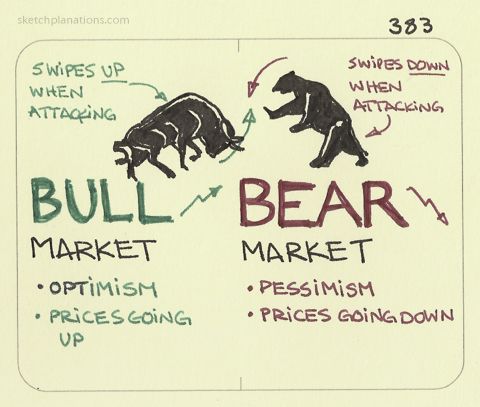
A technique to characterize whether the market (often equities) is performing exceptionally well or poorly.
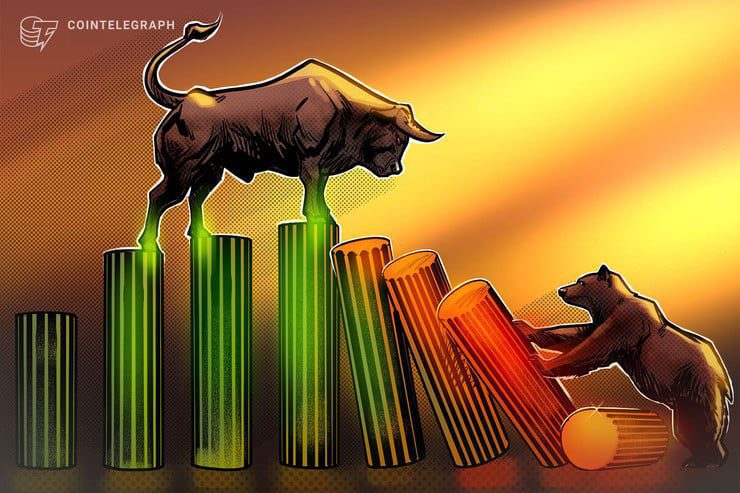
A bear market refers to a situation in which overall stock prices decrease, whereas a bull market refers to a situation in which overall stock prices increase. A good way to remember the difference between the two is that bulls use their horns to lift up their opponents, whereas bears use their strength to bring their opponents to the ground.
- Advertisement -
bull market and bear market
You’ll find monuments of bulls in many of the world’s financial centers. There is a well-known one on Wall Street in New York City, and one may also be found a little bit closer to home at the Bursa Malaysia.
Bear markets are not always a negative development. Some investors prefer to wait for bear markets to purchase shares of quality companies at a discount to better position themselves for the following bull market. No one can say for sure if the market is experiencing a bull run or a bear run; analysts may offer predictions, but sometimes the opinions of specialists will be in direct opposition to one another.
#9 – Pump-and-dump
The term “pump-and-dump” refers to a scenario in which the value of a financial instrument (stocks, for example) is artificially raised, and then it plummets. Those responsible for or can identify it will liquidate their shares and ownership, while those caught off guard will be left with worthless stocks.
Since pump-and-dump operations are fraught with peril, the government has enacted restrictions to prevent them from taking place. However, in unregulated markets such as DeFi, many customers have suffered financial losses.
- Advertisement -
How does it work?
Unethical people hype up and promote the ‘investment’, with false positive statements.
Many buy in, hoping to make a 1000% ROI.
At its peak price, the same unethical people will cash out and deplete all the value, thus making the remaining shares worthless.
pump and dump
Because of this, you need to approach everything being talked up in the world of investments with extreme caution. Do some research on the firm you are considering investing in, and check to see that none of the persons connected with it have a history of pumping and dumping.
Even if you are interested in joining, you should NEVER utilize all of your money or go all-in. If you want, maybe 1%, max. In this way, you will be able to satisfy your want to gamble (or whatever you want to call it), and even if you lose everything, you will still retain 99% of your money.
What other investment terms do you want to know?
What other financial terminology related to investments is of interest to you besides the ones discussed above? If you provide your thoughts in the comments section, I’ll be sure to add to and refine this list.
In this context, I’d also like to emphasize that there are no such things as silly questions because everybody has to begin somewhere. You can question me about anything; maybe someone else does, even if I don’t know the answer.